

Smartchain H2020 (2018-2021)
The EU-funded Horizon 2020 SMARTCHAIN-project aimed to foster and accelerate the shift towards collaborative short food supply chains (SFSCs) by linking scientists with practitioners and different actors in the sector. Through specific actions and recommendations, SMARTCHAIN introduced new robust business models and innovative practical solutions that enhance the competitiveness and sustainability of the European agri-food system.
SMARTCHAIN partners performed a thorough analysis of different types of SFSCs (on-farm direct sales, farmers’ markets, speciality shops, community supported agriculture, etc.), identifying the key parameters that influence sustainable food production and rural development in the different EU regions.
SMARTCHAIN’s key findings spurred further initiatives to change the European food supply chain model and are compiled in the booklet ‘Insights and recommendations to support collaborative short food chains’.
A thorough analysis of different types of short food chains across Europe, such as direct farm sales, farmers’ markets, community-supported agriculture, cooperatives and other collaborations and their regulatory frameworks, led to the formulation of policy and business recommendations in the agri-food sector.
Dr. F. Javier Casado Hebrard from the University of Hohenheim, project leader of SMARTCHAIN:
“Over 3 years of intensive work, SMARTCHAIN analysed 18 Short Food Supply Chains from 9 different countries to understand the factors that play a role in their success, as well as to identify their key needs, barriers and bottlenecks, with a focus on the consumer perspective. In the SMARTCHAIN booklet, farmers, food producers and other practitioners can find applicable solutions, recommendations and useful tips to improve farm performance while increasing sustainability. We have also developed a set of actionable policy recommendations for policymakers to support short food chains and their competitiveness.”
“Thanks to the identification of the main parameters affecting sustainable food production and rural development in the different European regions, SMARTCHAIN has identified the crucial factors that play an essential role for short chain businesses, leading to the identification of key success factors and also bottlenecks for their development and exploitation.”
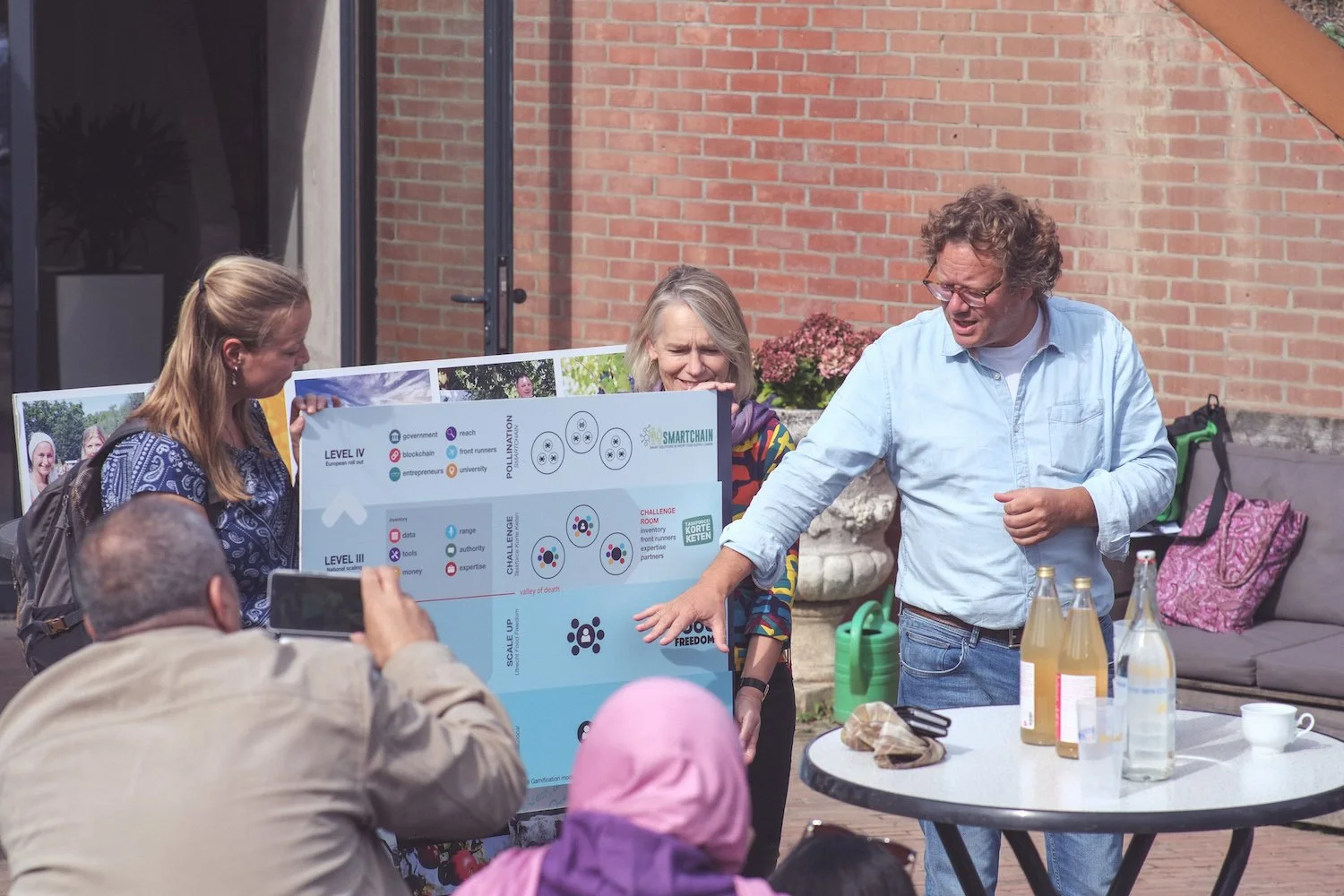
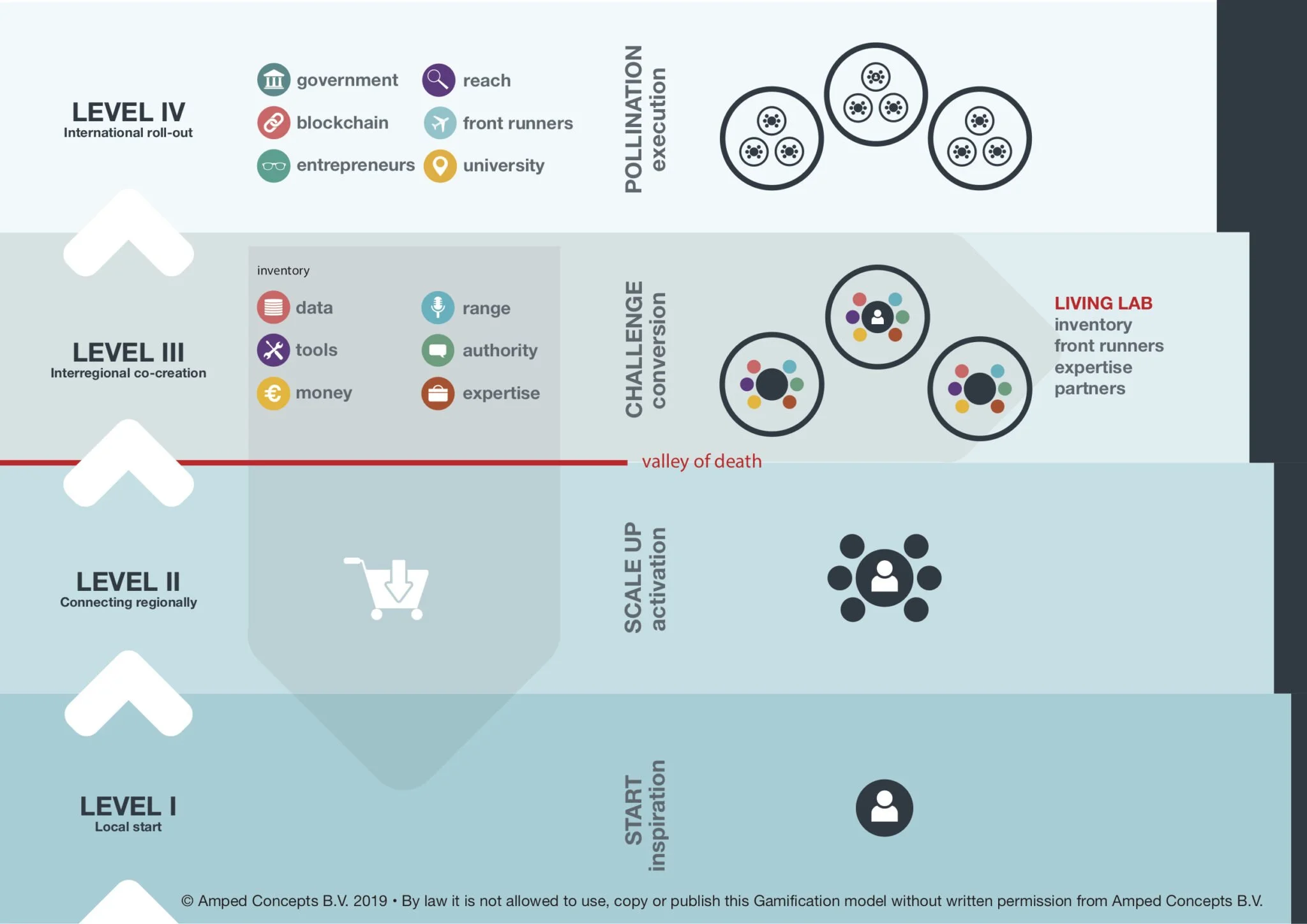
Amped, the Dutch HUB for SMARTCHAIN, developed and tested the GAIN Transition Model within the project. The Dutch Task Force Short Chain and the Dutch Ministry of Agriculture embraced this transition model for collaboration, governance and market innovation. The model has also received a lot of attention within Europe. These solutions can increase competitiveness in the form of economic growth, logistics improvements and the creation of new sales channels.
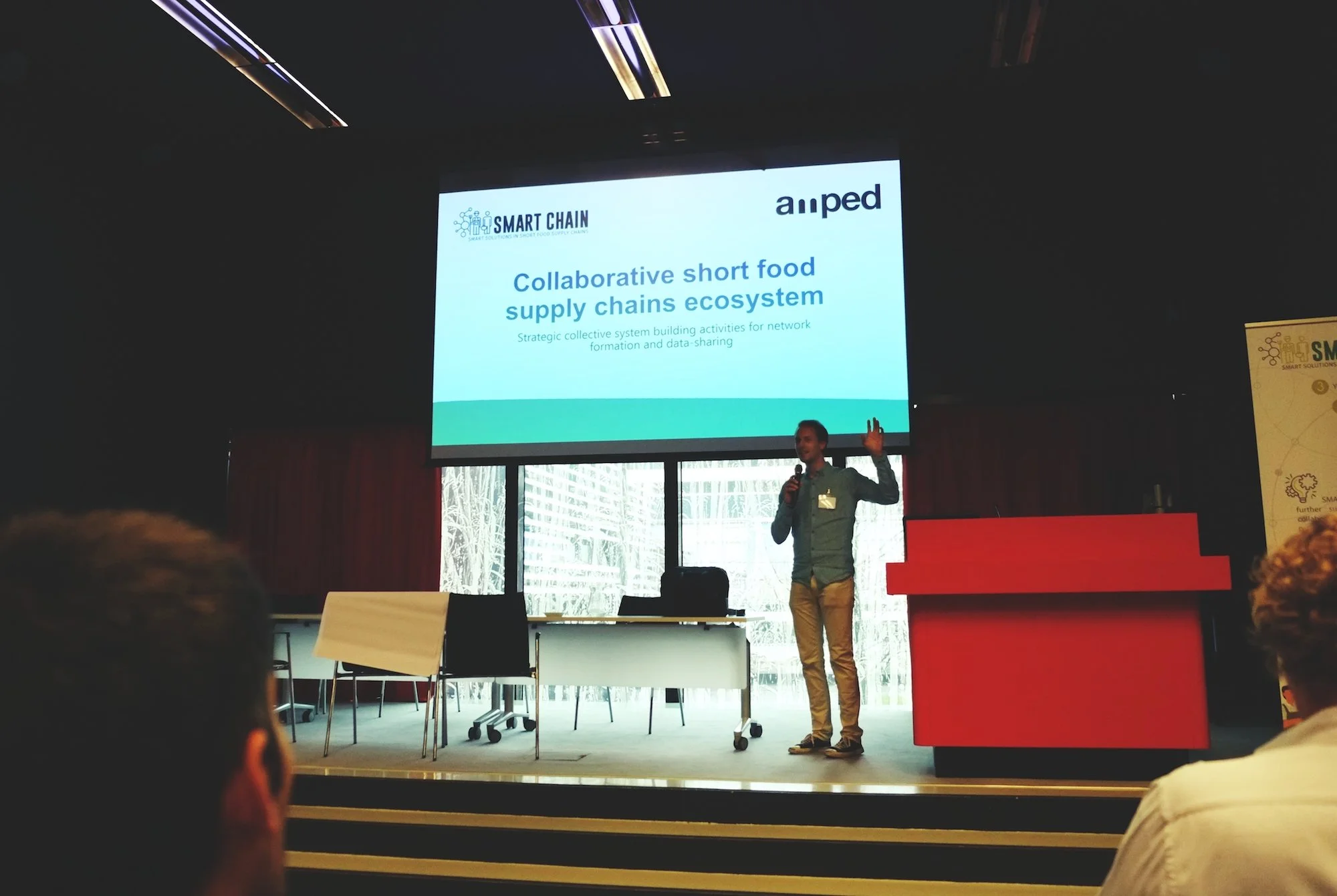
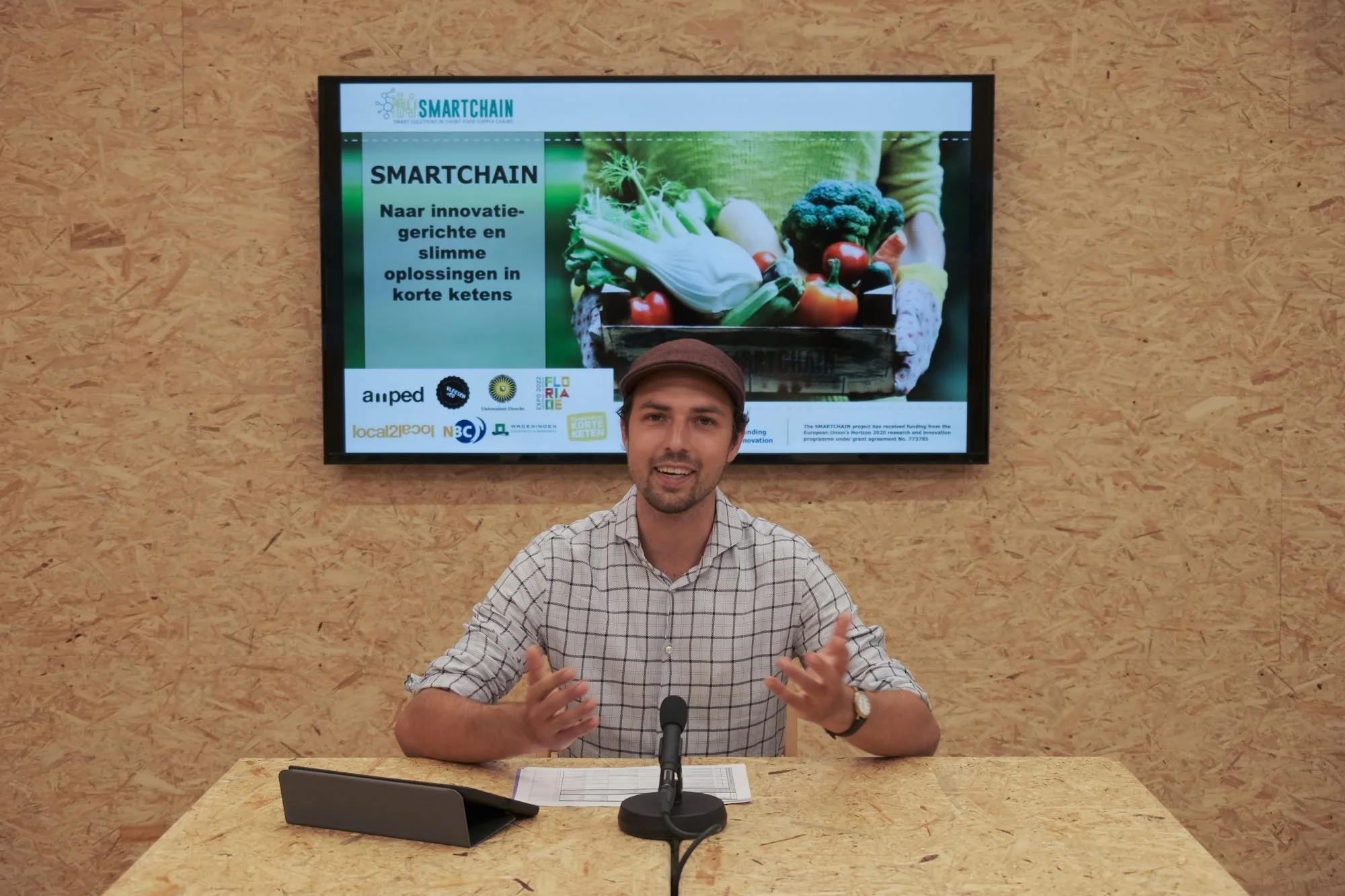
SMARTCHAIN’s research results were presented in the Netherlands on June 30th 2021 via a live webcast at the Floriade Expo’s Food Forum, organised and hosted by Amped in collaboration with project partners Utrecht University and Nederlands Bakkerij Centrum (NBC), and the case studies Local2Local and Vleesch & Co.
Social innovation at the heart of short food chain conversion
The SMARTCHAIN guide also focuses on social innovations for short food chains and an assessment of their sustainability from economic, environmental and social perspectives. In addition, it presents the results of an analysis of consumers’ value perception and attitudes towards short food chains and makes suggestions on how to achieve greater acceptance of this type of supply chain.
The SMARTCHAIN partners have launched an Innovation Platform to facilitate knowledge, innovative solutions and knowledge transfer among leading actors, with the common goal of making a difference in the short food chains game. The SMARTCHAIN booklet is available on the Platform in nine languages: Dutch, French, English, German, Greek, Hungarian, Italian, Serbian and Spanish.
About SMARTCHAIN
Short Food Supply Chains (SFSC) are food systems that can address some of the key needs and opportunities of farmers, food producers and consumers. They can offer many advantages over conventional longer food chains, for example, the short distance between production and consumption, access to locally produced food of known origin, and support for the local economy.
SMARTCHAIN’s 43 partners, from 11 European countries, worked for 3 years to support the shift to SFSC collaboratively by connecting scientists with practitioners and different actors in the sector. The SMARTCHAIN project “Towards innovation-driven and smart solutions in short food supply chains” was coordinated by the University of Hohenheim and funded by the European Union’s Horizon 2020 research and innovation programme under grant agreement No 773785.
What’s next? The SMARTCHAIN Innovation Platform, one of the main results of the project, will remain accessible thanks to the decision of 5 new Horizon 2020 projects to continue using and updating it in the coming years (2026: see the Sustainable Food System Innovation Platform, per EU4Advice). An overview of the content and material shared by SMARTCHAIN partners on the platform is also available in the booklet.
Website: www.smartchain-h2020.eu
SMARTCHAIN Innovation Platform
Short Food Chain EU Community
