

Recap Day 2 Cities Leading Food Production at VIV Europe 2026
Day 2 of Cities Leading Food Production opened with a powerful and urgent perspective on resilience. The workshops and roundtables explored how water, technology, data, design, and real-world crisis experience can help build stronger regional food systems. Practical solutions and honest lessons stood out throughout the day.
Food Security Under Fire: Lessons from Kyiv with Nazar Bobitski (UCAB)
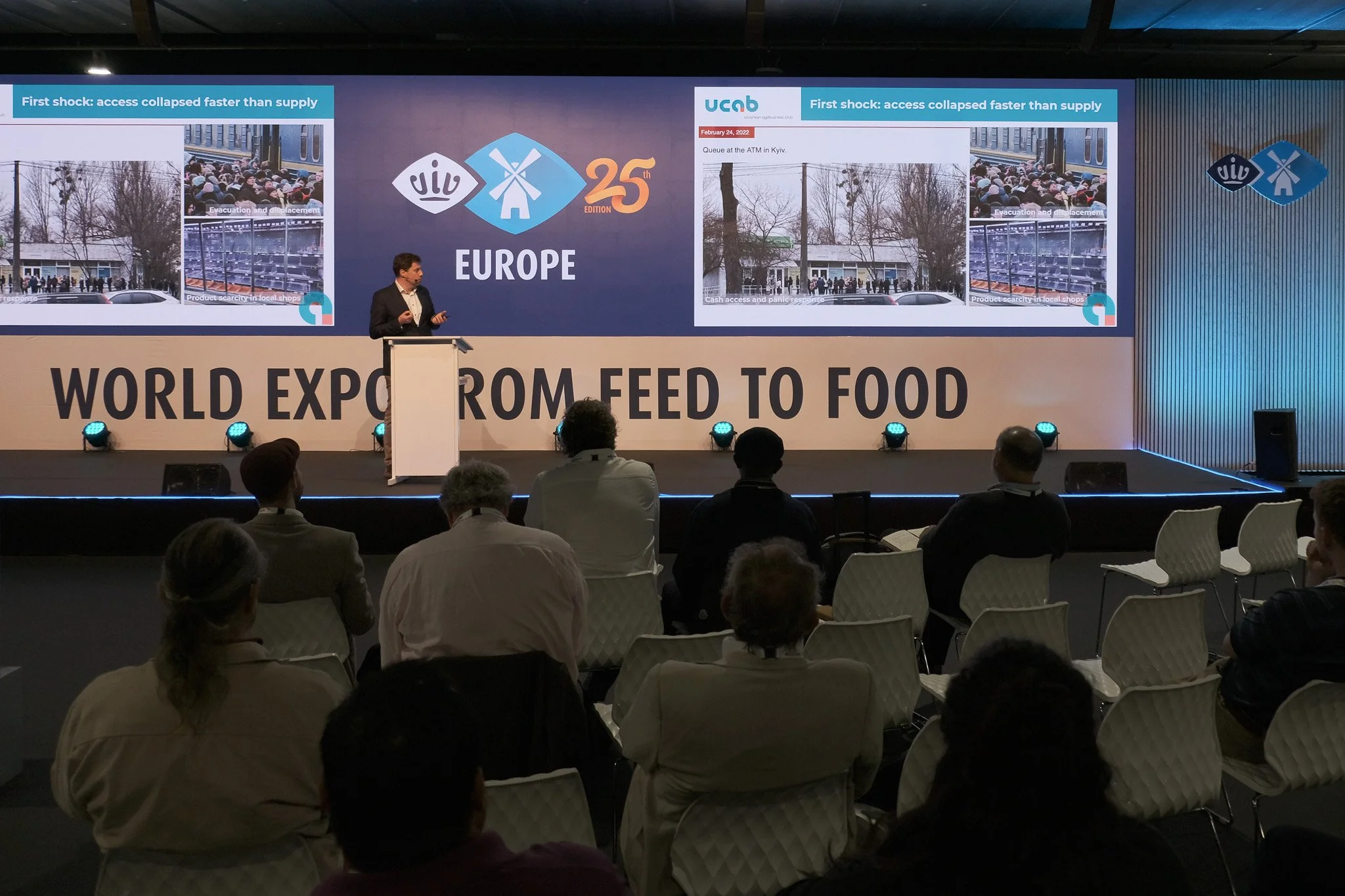
Nazar Bobitski, Director of the association Ukrainian Agribusiness Club (UCAB) Brussels office, opened Day 2 with the seminar “Food Security Under Fire”. Drawing from Ukraine’s experience during the first weeks and months of Russia’s full-scale invasion in 2022, Bobitski shared critical insights on maintaining food access in wartime conditions, with direct relevance for cities and regions facing crises worldwide.
Bobitski made a key distinction: in times of war or crisis, it is often not the lack of food production that causes problems, but the lack of access to food. In Kyiv, even when stocks existed, disrupted logistics, damaged infrastructure, power outages, and economic shocks made it difficult for many residents — especially vulnerable groups — to obtain essential supplies. According to WFP data referenced in the presentation, 57% of Kyiv residents reported scarcity of some products in local shops, while 34% had no income or depended on assistance.
Practical lessons for resilience included:
Cities must plan for access, not only for stocks.
Logistics nodes — warehouses, cold storage, mills, and fuel supply — must be protected as critical infrastructure.
Market channels and retail should be kept alive as long as possible; in crises, they become lifelines.
Government-business-civil society cooperation is essential.
Vulnerable groups need to be mapped in advance.
Energy resilience is inseparable from food security.
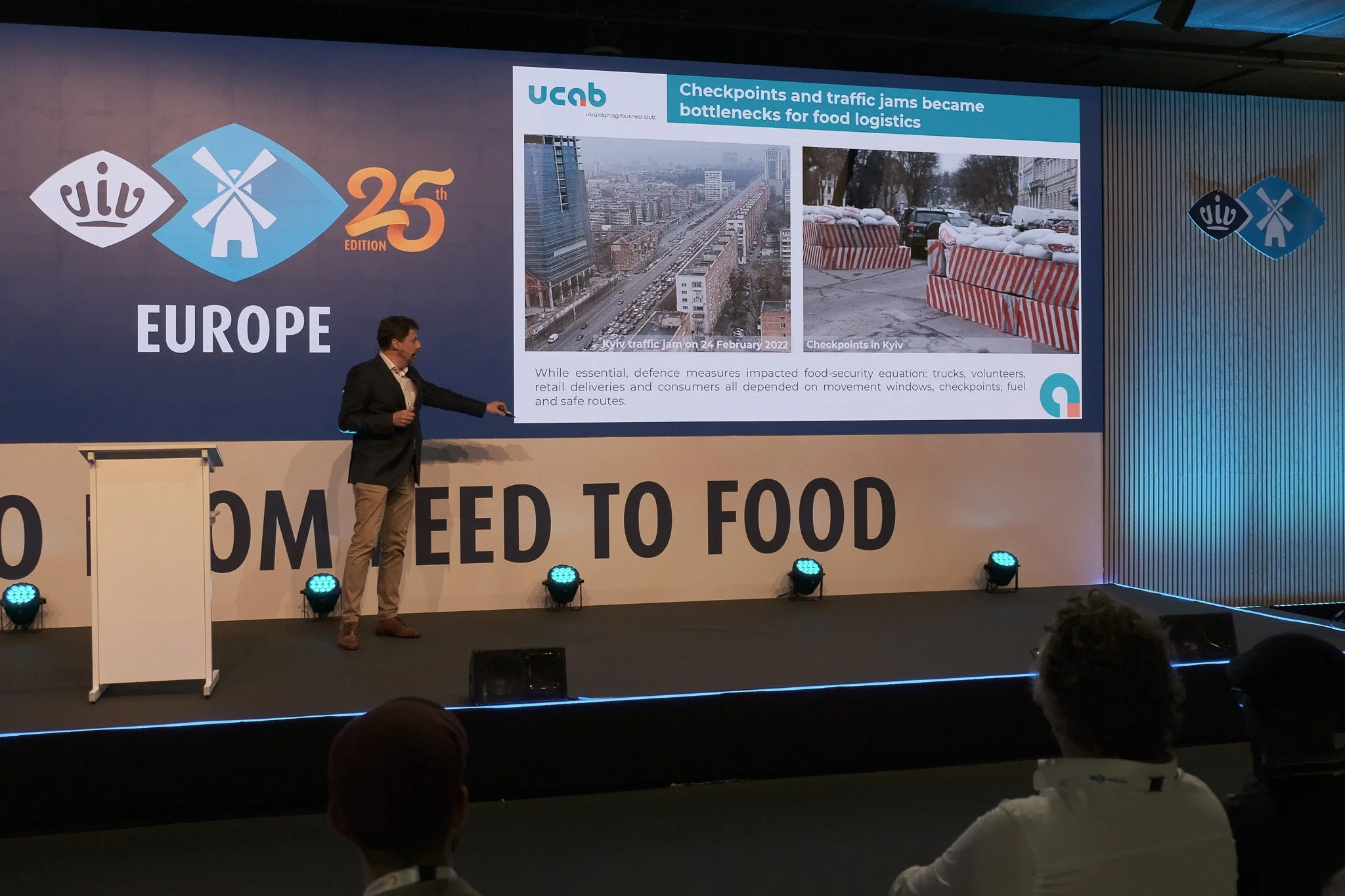
Bobitski concluded that Ukraine’s experience demonstrates food security in wartime is not only about production. It is about access, logistics, energy, infrastructure, and effective coordination. These lessons are highly relevant for European cities and regions preparing for future disruptions, whether caused by conflict, climate extremes, or supply chain shocks.
For farmers, advisors, and policymakers working on short food supply chains and regional resilience, the seminar underscored the importance of decentralised, robust local systems and proactive planning. Strengthening urban-rural linkages, protecting critical infrastructure, and maintaining functional markets can make food systems far more shock-resistant.
The Cities Leading Food Production programme continues to highlight such real-world experiences to support the development of more resilient regional food networks across Europe and beyond.
Water: More Than Just H₂O
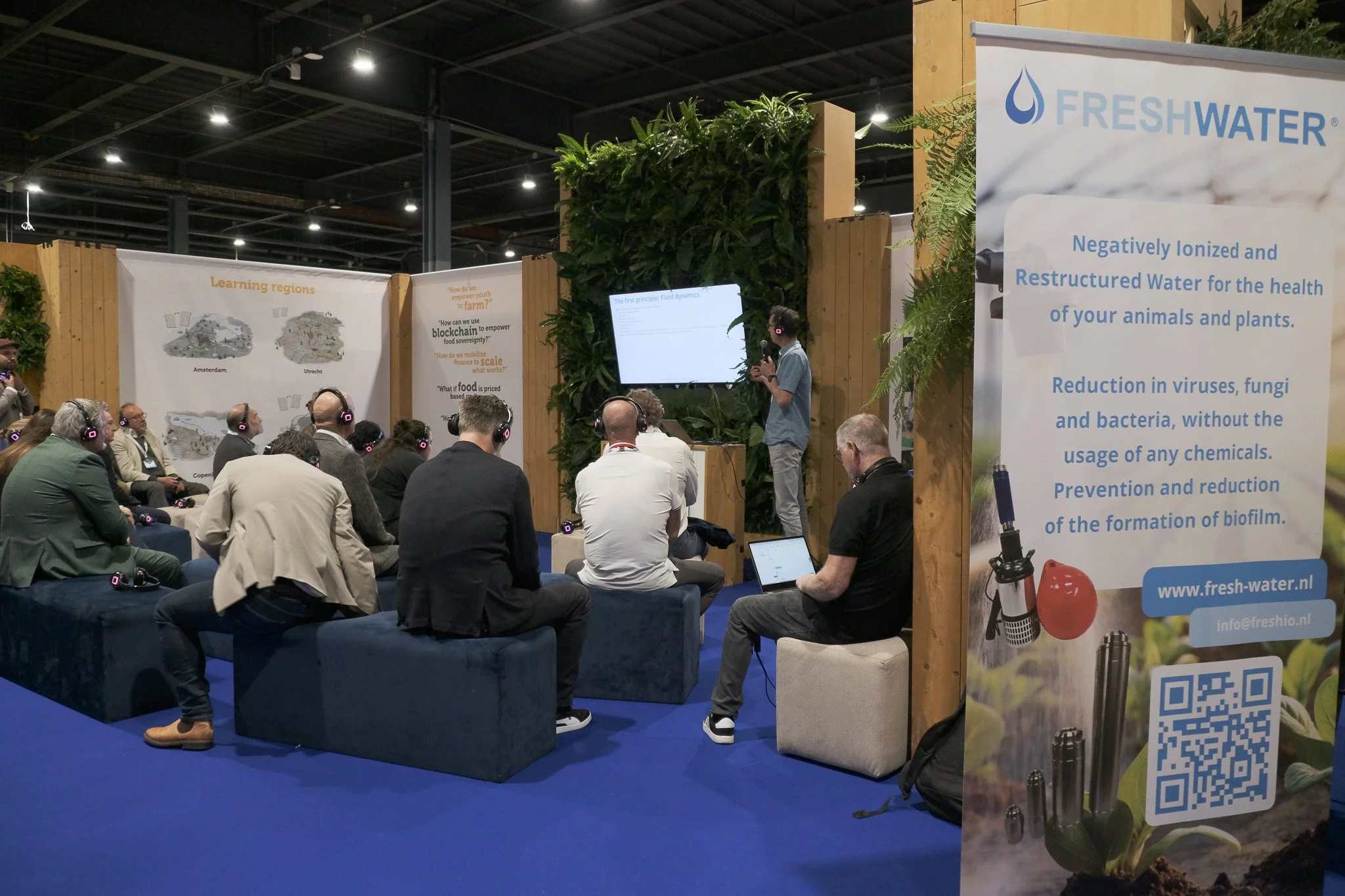
Independent researcher Laurens Hanemaaijer, member of the Vital Food Community, hosted an eye-opening workshop on water’s natural properties. He explained how structured water and natural flow patterns improve nutrient delivery, plant health, and system efficiency. Practical tools such as piezoelectric disinfection and electromagnetic treatments can reduce chemicals, clear pipes, and support better crop growth. For farmers and processors, this means lower costs and healthier systems by working with water’s intelligence rather than against it.
Water Has Structure — And That Matters
Most of us think of water as simple H₂O. But Laurens showed it’s more like a dynamic, living system. Water molecules love forming tetrahedral shapes (think tiny pyramids) and can organise into “coherent domains” — structured clusters that behave differently from regular bulk water.
This structure affects everything: how water carries nutrients, dissolves minerals, holds information, and interacts with living things. When water moves naturally — with vortices, meanders, and flow like in rivers — it stays healthier, aerated, and full of life. In our pipes and systems, that natural motion is missing, which causes problems like scale, biofilm, and inefficiency.
Cool Tech That Works With Water’s Nature
Laurens shared some impressive real-world solutions:
Piezoelectric disinfection: Apply mechanical stress (like vibration or ultrasound) to certain materials and they generate tiny electric charges. This can kill bacteria (4.5 log reduction of E. coli in 20 minutes) and break down over 90% of stubborn pollutants — all without harsh chemicals. One startup just raised €16 million to scale this for “forever chemicals.”
Electromagnetic fields: Magnetic fields help water form better clusters. Electric fields can do the opposite. Simple treatments using these principles have cleared fouled heating systems in three months, improved heat transfer, and boosted plant growth.
Why This is Important for All of Us
For farmers and growers: Better structured water can mean improved soil infiltration, stronger plants, and reduced need for chemicals.
For agribusiness and industry: Cleaner pipes, more efficient heating/cooling, and lower operational costs add up fast.
For policymakers and advisors: These approaches support Green Deal goals — cutting chemicals, saving energy, and building climate resilience — without massive infrastructure overhauls.
For students and young people: Water science is a growing field with real impact. From designing better irrigation to developing new treatment tech, there’s space for creative, practical careers here.
Laurens kept it grounded: we don’t need to reinvent everything. We can work with water’s natural intelligence — mimicking river flows, using mechanical energy, and respecting its ability to organise itself.
He’s putting together a graphic novel to make this knowledge more accessible (great idea!) and has a detailed white paper available for those who want to dig deeper.
The Takeaway
Water isn’t just a resource — it’s a partner. When we treat it poorly, systems get clogged and inefficient. When we understand and support its natural properties, everything works better: plants grow stronger, equipment lasts longer, and we use fewer chemicals.
If you work with water — on a farm, in processing, in policy, or just care about the future of food — it’s worth exploring these ideas. Simple changes in how we move, treat, and respect water can deliver big wins for productivity, sustainability, and cost.
What do you think — have you seen water behave differently on your farm or in your systems? Drop a comment. Let’s keep the conversation flowing.Independent researcher Laurens Hanemaaijer, member of the Vital Food Community, hosted an eye-opening workshop on water’s natural properties. He explained how structured water and natural flow patterns improve nutrient delivery, plant health, and system efficiency. Practical tools such as piezoelectric disinfection and electromagnetic treatments can reduce chemicals, clear pipes, and support better crop growth. For farmers and processors, this means lower costs and healthier systems by working with water’s intelligence rather than against it.
Water Has Structure — And That Matters
Most of us think of water as simple H₂O. But Laurens showed it’s more like a dynamic, living system. Water molecules love forming tetrahedral shapes (think tiny pyramids) and can organise into “coherent domains” — structured clusters that behave differently from regular bulk water.
This structure affects everything: how water carries nutrients, dissolves minerals, holds information, and interacts with living things. When water moves naturally — with vortices, meanders, and flow like in rivers — it stays healthier, aerated, and full of life. In our pipes and systems, that natural motion is missing, which causes problems like scale, biofilm, and inefficiency.
Cool Tech That Works With Water’s Nature
Laurens shared some impressive real-world solutions:
Piezoelectric disinfection: Apply mechanical stress (like vibration or ultrasound) to certain materials and they generate tiny electric charges. This can kill bacteria (4.5 log reduction of E. coli in 20 minutes) and break down over 90% of stubborn pollutants — all without harsh chemicals. One startup just raised €16 million to scale this for “forever chemicals.”
Electromagnetic fields: Magnetic fields help water form better clusters. Electric fields can do the opposite. Simple treatments using these principles have cleared fouled heating systems in three months, improved heat transfer, and boosted plant growth.
Why This is Important for All of Us
For farmers and growers: Better structured water can mean improved soil infiltration, stronger plants, and reduced need for chemicals.
For agribusiness and industry: Cleaner pipes, more efficient heating/cooling, and lower operational costs add up fast.
For policymakers and advisors: These approaches support Green Deal goals — cutting chemicals, saving energy, and building climate resilience — without massive infrastructure overhauls.
For students and young people: Water science is a growing field with real impact. From designing better irrigation to developing new treatment tech, there’s space for creative, practical careers here.
Laurens kept it grounded: we don’t need to reinvent everything. We can work with water’s natural intelligence — mimicking river flows, using mechanical energy, and respecting its ability to organise itself.
He’s putting together a graphic novel to make this knowledge more accessible (great idea!) and has a detailed white paper available for those who want to dig deeper.
The Takeaway
Water isn’t just a resource — it’s a partner. When we treat it poorly, systems get clogged and inefficient. When we understand and support its natural properties, everything works better: plants grow stronger, equipment lasts longer, and we use fewer chemicals.
If you work with water — on a farm, in processing, in policy, or just care about the future of food — it’s worth exploring these ideas. Simple changes in how we move, treat, and respect water can deliver big wins for productivity, sustainability, and cost.
What do you think — have you seen water behave differently on your farm or in your systems? Drop a comment. Let’s keep the conversation flowing.
Agroforestry That Actually Works
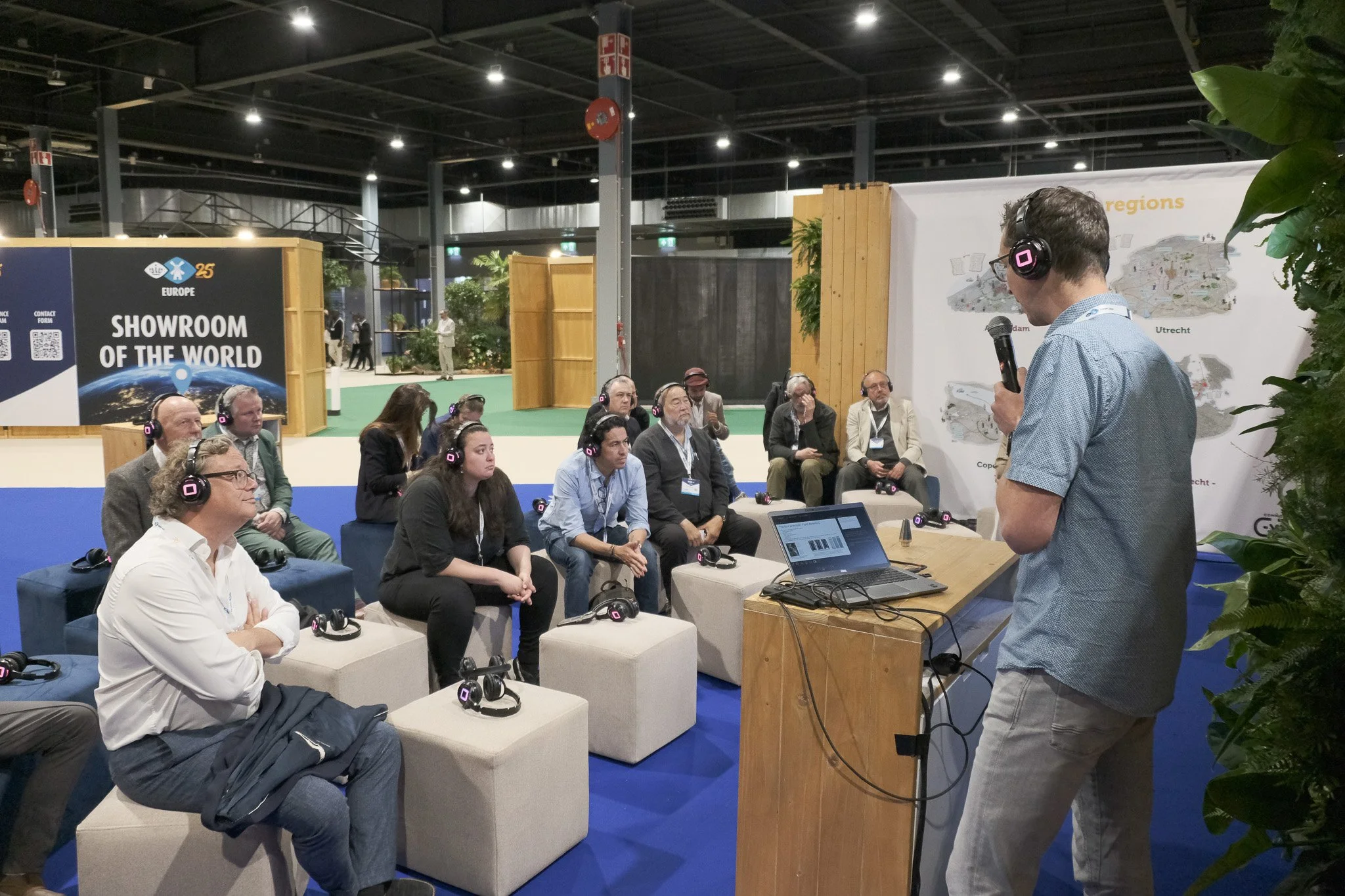
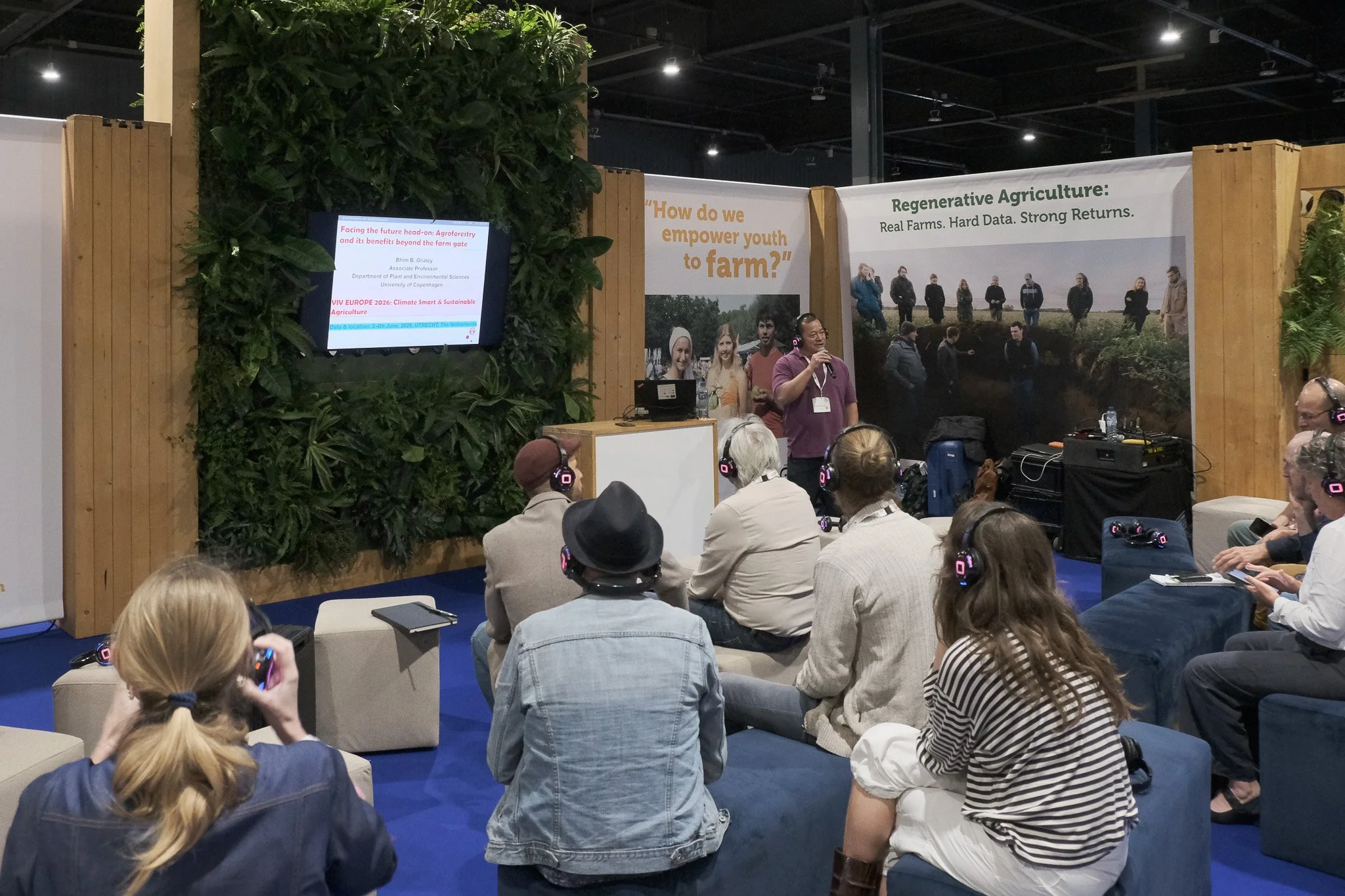
Bhim Bahadur Ghaley, Associate Professor at the University of Copenhagen, and Evert Prins, researcher at the Louis Bolk Institute and actively involved with the National Platform Agricultural Experimentation Locations in the Netherlands. delivered two compelling workshops on agroforestry — highlighting its potential as a transformational approach to sustainable agriculture.
Ghaley’s research shows agroforestry is not just another farming method, but a smarter, more resilient system that delivers multiple benefits for productivity, economics, climate, and ecosystems.
Strong Productivity and Economic Case
One of the clearest findings is the Land Equivalent Ratio (LER). Across European systems, agroforestry achieves an average LER of 1.36 — meaning it can produce the same output on 36% less land than monocropping. This efficiency comes from combining trees with crops in ways that make better use of sunlight, water, and nutrients.
Economic analysis from Danish systems shows agroforestry yielding around €704 per hectare annually, comparable to or better than monoculture. More importantly, the benefit-cost ratio is higher (€2.35 per euro invested vs €1.78 for monoculture). Even under a 33% drought risk scenario, agroforestry maintains a stronger return (€2.19). In 2023’s extreme dry conditions, it demonstrated clear yield stability compared to conventional wheat.
Research Driving Practical Solutions
Ghaley leads work in major EU projects, including the Reforest project (over €3 million, 14 partners across 10 countries and 7 living labs). These living labs bring together farmers, researchers, advisors, and policymakers to test and refine solutions in real conditions.
Additional work explores digital tools, IoT monitoring, satellite data, and even hydroponics and circular systems — all contributing to the broader goal of sustainable, multifunctional agriculture.
For farmers: Agroforestry offers diversified income, greater resilience, and better long-term economics.
For advisors and processors: It supports supply chains with more sustainable, traceable products and stronger environmental performance.
For policymakers and government officials: The data provides clear evidence to support updated subsidies, payments for ecosystem services, and policies that reward climate-smart practices.
For NGOs: Agroforestry aligns perfectly with goals around biodiversity, climate action, and rural development.
Ghaley’s work shows agroforestry as a practical, evidence-based pathway for the food transition — delivering food security, environmental benefits, and economic viability at the same time.
With living labs, digital tools, and strong international collaboration already underway, the foundation for wider adoption is in place. Policymakers, farmers, and organisations interested in regenerative solutions should take note: agroforestry offers proven benefits well beyond the farmgate.
From Small Beginnings to Nationwide Networks
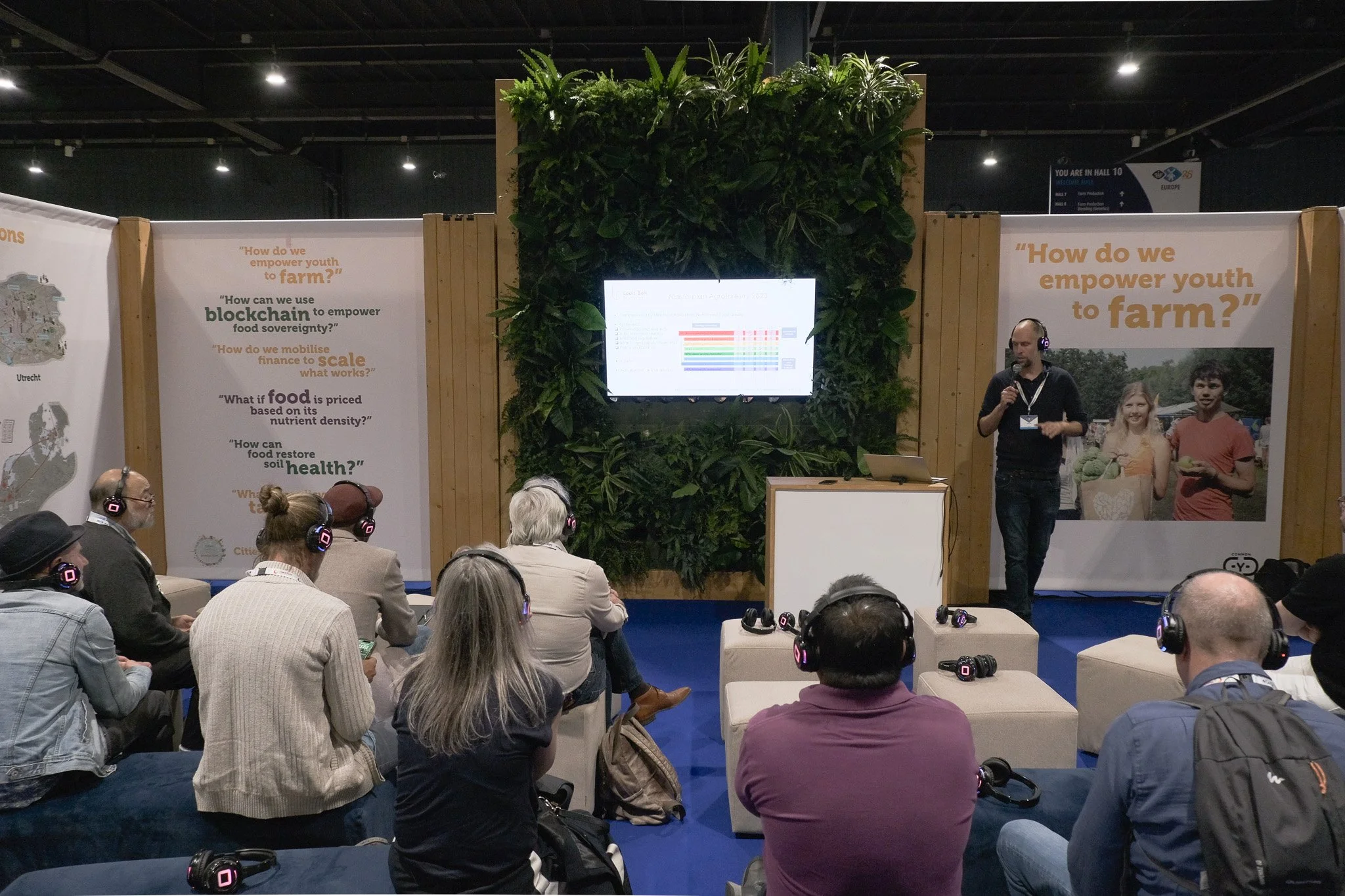
Evert Prins gave a clear, down-to-earth overview of where agroforestry stands in the Netherlands and how farmers are making it work on the ground. Back in 2017, a small group of 15 dairy farmers started connecting and sharing knowledge about trees on farmland. Today, these provincial networks have grown to over 100 farmers across all 12 provinces. It’s a genuine bottom-up movement — not something pushed from above, but driven by farmers who see the practical benefits.
Evert explained that agroforestry isn’t one single recipe. There are eight different system types in the Netherlands, ranging from simple tree lines that support crops to more complex multi-layered food forests. The key is matching the right system to your farm, your soil, and your goals.
Making Money While Improving the Land
One of the most useful parts of the session was the discussion on revenue models. Evert shared four main strategies that farmers are successfully using:
Getting more yield from the same land
Cutting external inputs (fertiliser, pesticides) thanks to trees improving soil and microclimate
Earning from ecosystem services (like carbon)
Creating extra income streams by combining trees with other farm activities
He was honest: it’s not always easy. There are regulatory hurdles, knowledge gaps, and the need for better economic data. That’s why practical tools like tree selection guides and proper planting manuals are so important — they help reduce the common problem of young trees dying.
Experimentation and Real-World Testing
Evert Prins highlighted the Agroforestry Blueprint site — a living laboratory on a former poultry farm where they are testing and demonstrating multiple systems. Plans are in place to establish 21 different agroforestry setups next year across a larger area. This kind of hands-on experimentation is exactly what the National Platform Agricultural Experimentation Locations supports.
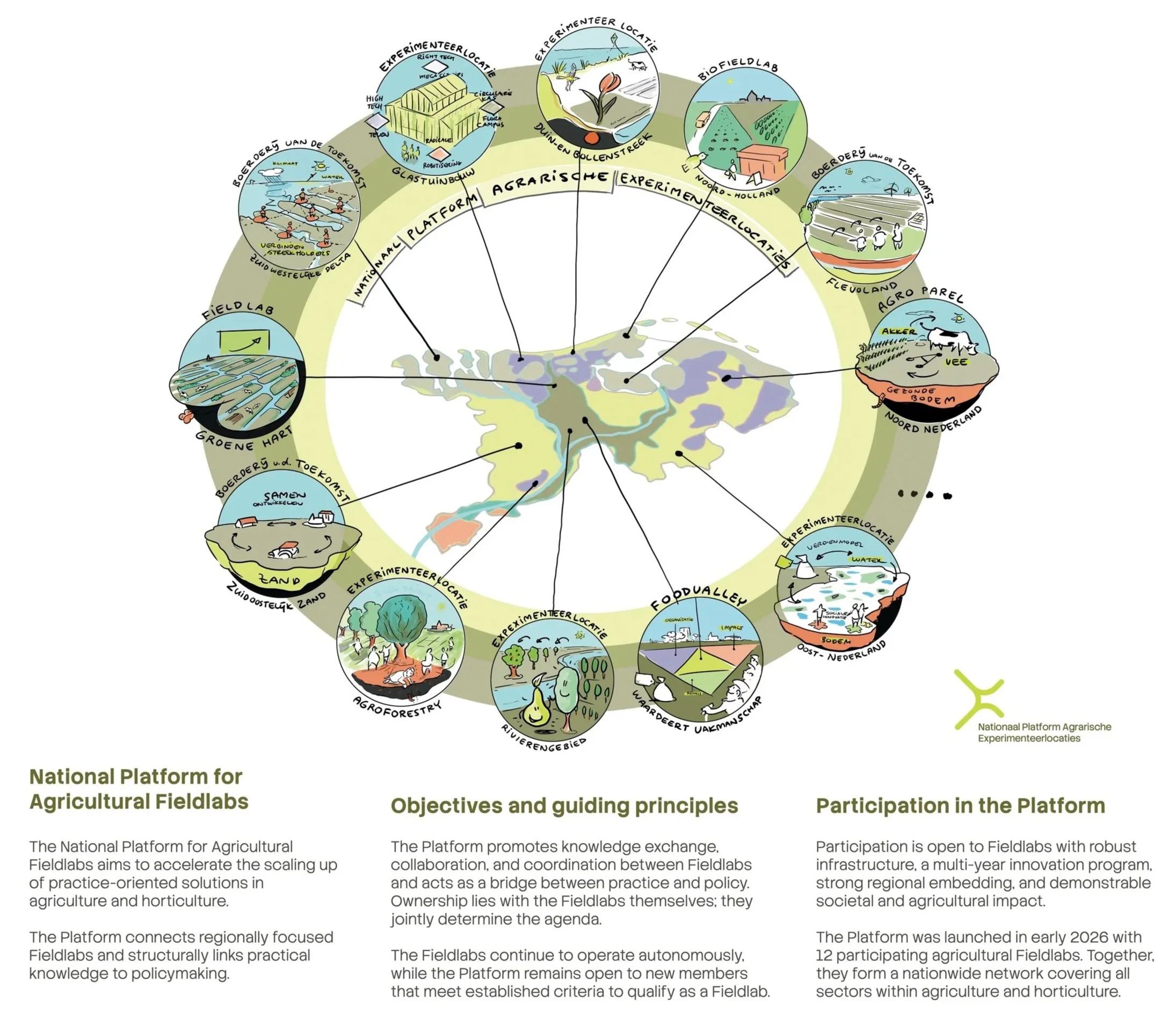
They’re also running field trials on crop yields near trees (especially in potato systems) and pushing for a national monitoring programme that would track results from around 1,500 pioneering farmers. Good data is essential if we want to scale agroforestry properly and convince policymakers.
Evert described agroforestry as a kind of “Swiss army knife” for Dutch agriculture — helping with climate adaptation, biodiversity, soil health, water management, and even animal welfare. Despite past policy setbacks, momentum is clearly building through farmer networks, experimentation sites, and growing collaboration.
Evert and his colleagues at the Louis Bolk Institute are showing that agroforestry isn’t just a nice idea — it’s a workable, scalable approach already being tested and refined by Dutch farmers today.
Short Food Supply Chains that Actually Work: Practical Insights from Jan Willem van der Schans
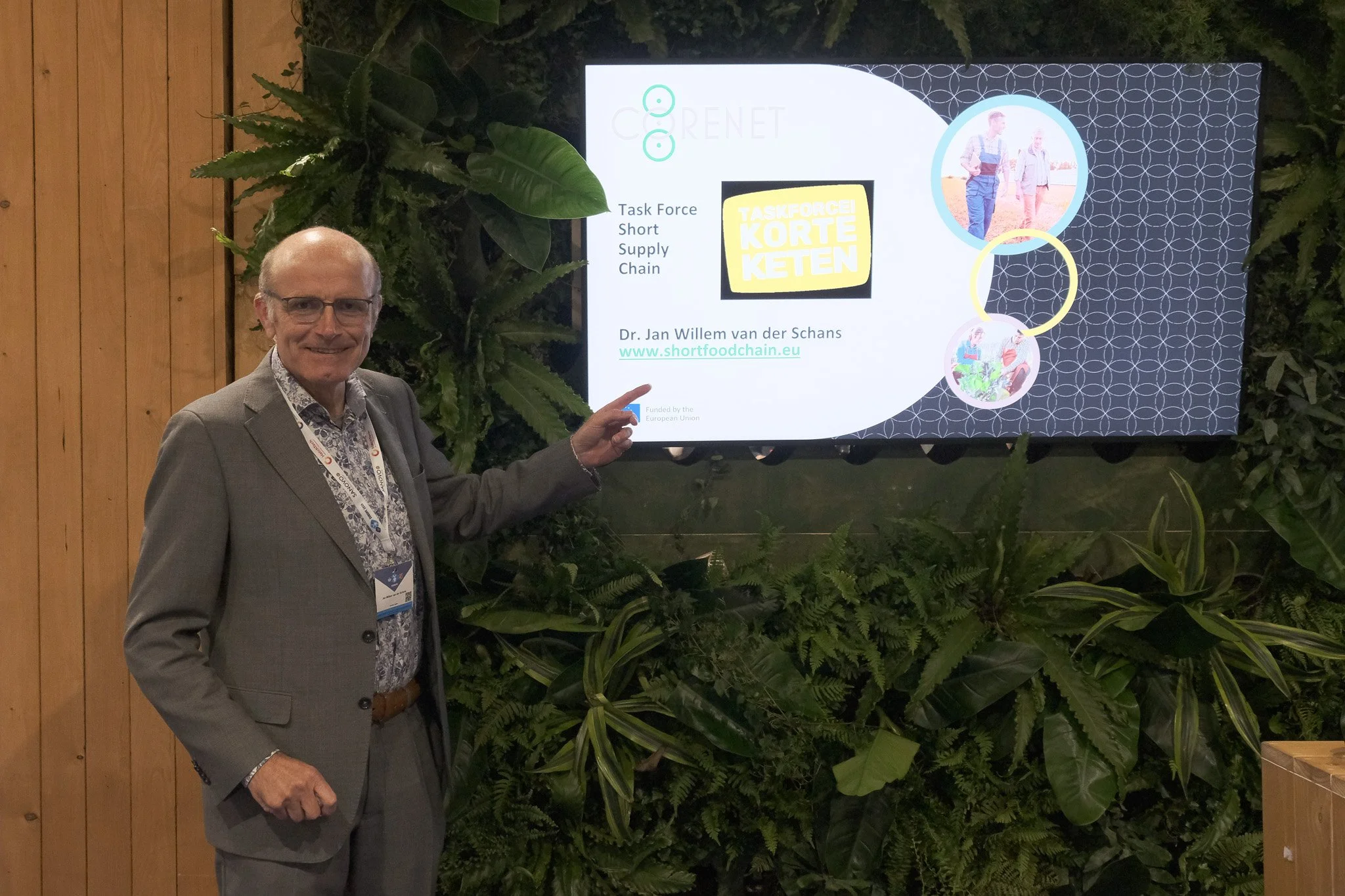
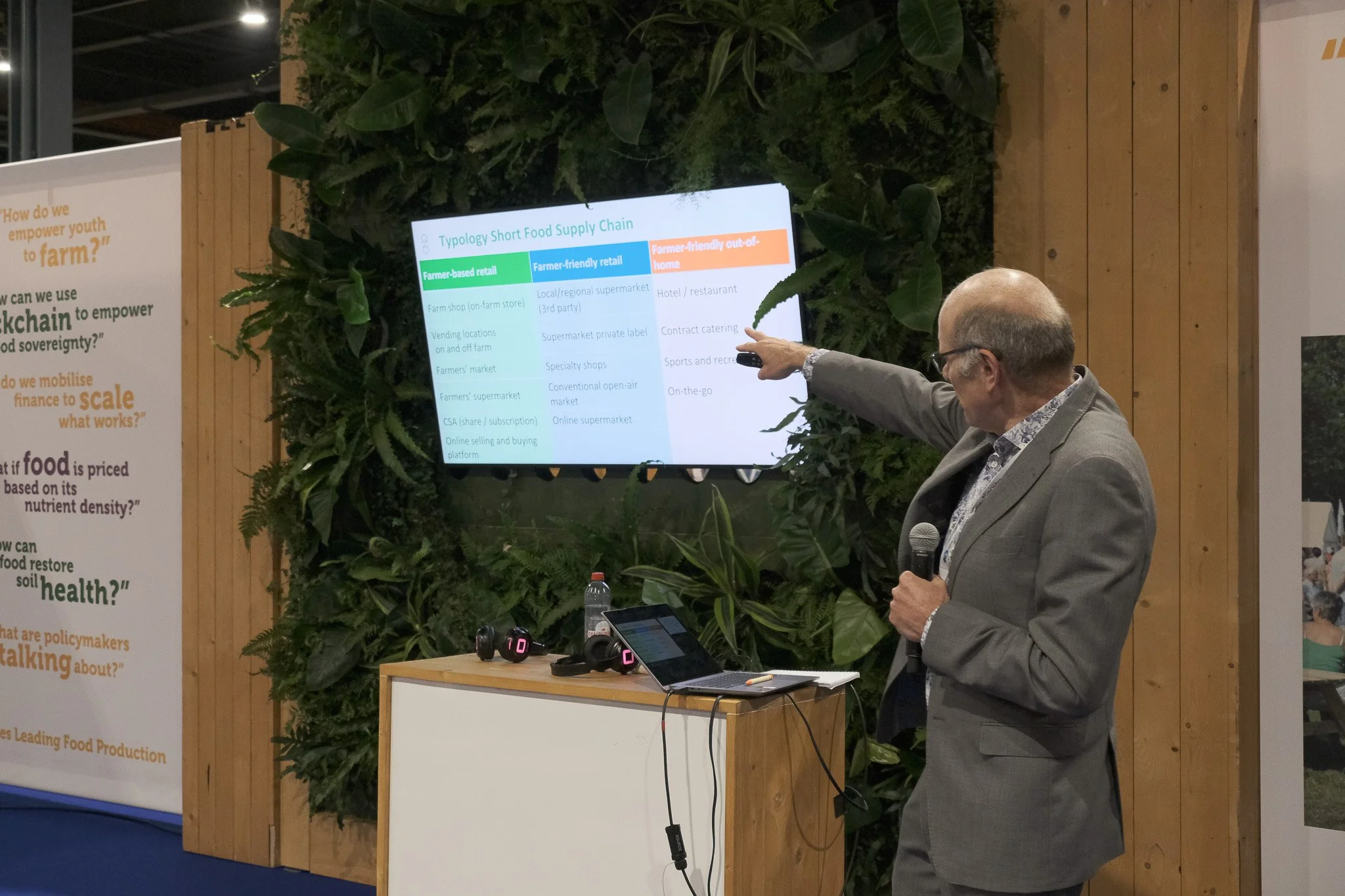
Jan Willem van der Schans led an insightful workshop on short food supply chains and the important role of advisors. Jan Willem is actively involved in the European Horizon project COREnet and is co-founder of the Dutch Task Force Short Chain. With years of experience bridging research, policy, and practice, he offered a clear, realistic view of how short supply chains can succeed in today’s market.
He presented examples from across Europe, including:
Community-supported agriculture models
Standardised farmers’ markets in Italy
Successful supermarket collaborations in the Netherlands
Public procurement initiatives (schools, prisons)
One key lesson: standardisation often drives success. Clear quality, branding, and reliable supply help consumers recognise and trust local products.
Working with Supermarkets: Opportunities and Realities
A big part of the discussion focused on supermarkets — still the dominant channel in many countries. Jan Willem noted that while large headquarters can be tough negotiators, local franchise owners are often more flexible and willing to build long-term relationships with farmers. In some cases, farmers receive up to 20% higher prices through direct local deals.
He shared positive examples, such as discounter Lidl investing in animal welfare projects with farmers, showing that cooperation is possible. However, he was realistic about market power concentration and the need for better balance.
The Advisor’s Role: From Process to Revenue Focus
Jan Willem stressed that many advisors currently give general process advice. The new advisory guide being developed in the COREnet project aims to change this by helping advisors:
Use clear typologies of supply channels
Focus on realistic revenue streams for farmers
Tailor recommendations to specific products and local markets
The guide will be available across EU member states and is meant to make advisors more effective in supporting farmers who want to sell more locally or regionally.
Challenges and the Way Forward
Participants discussed common hurdles: banks are often reluctant to finance smaller or innovative models, many agreements are still informal handshake deals based on trust, and scaling logistics remains difficult.
Jan Willem advised focusing on market creation and logistical infrastructure rather than only subsidising individual farmers. Public support for building efficient local distribution systems could make a big difference.
For agricultural advisors, policymakers, supply chain companies, and short chain experts, the workshop offered concrete tools and realistic perspectives. Short supply chains are not a romantic ideal — they are a practical part of the food system that can deliver fresher products, better prices for farmers in some cases, and stronger regional connections.
Precision Farming at Scale
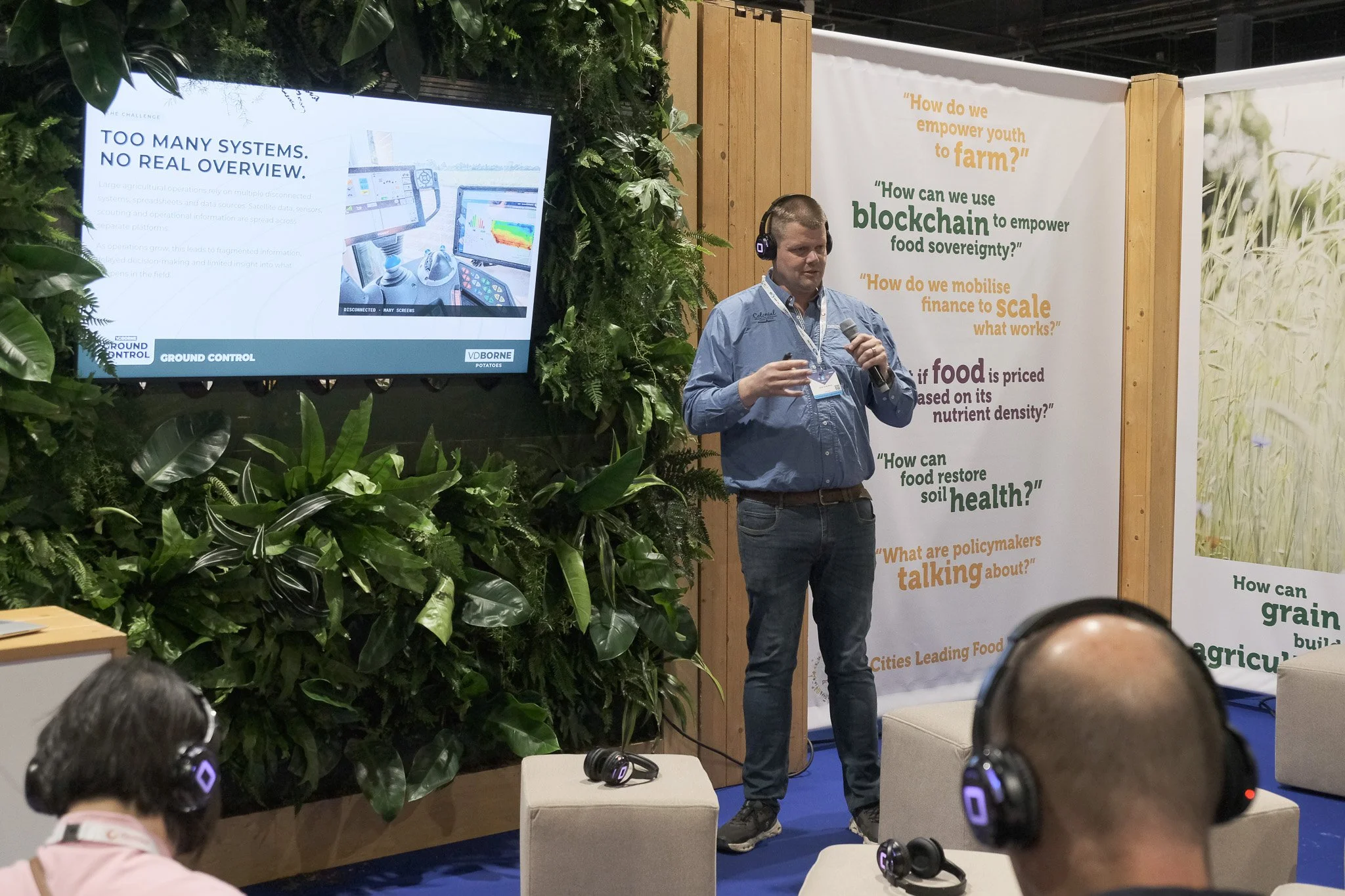
Jacob van den Borne shared how his operation manages thousands of hectares with a small team using drones, sensors, and the “Ground Control” platform. Real-time data helps make precise decisions that cut inputs, improve yields, and support soil health.
For Jacob, precision farming isn’t about buying every new gadget. It’s about doing the right action, at the right time, in the right place. He started seriously with the approach in 2006 and has steadily reduced overlapping work in fertilising and cultivation by more than 10%. That alone paid back the initial technology investment within a year.
The farm uses a powerful tech ecosystem:
A fleet of 15+ drones with multispectral sensors
Ground sensors and satellite data
All brought together in their own software platform called Ground Control
This system gives real-time insights into biomass, chlorophyll levels, water stress, and more. AI is now being trained on 12 years of data to provide even better irrigation and management advice.
Jacob doesn’t keep all this knowledge to himself. The farm runs the VDBORNE Campus — a real learning centre with field days, workshops, and a free e-learning platform that walks people through their 16-step precision farming approach.
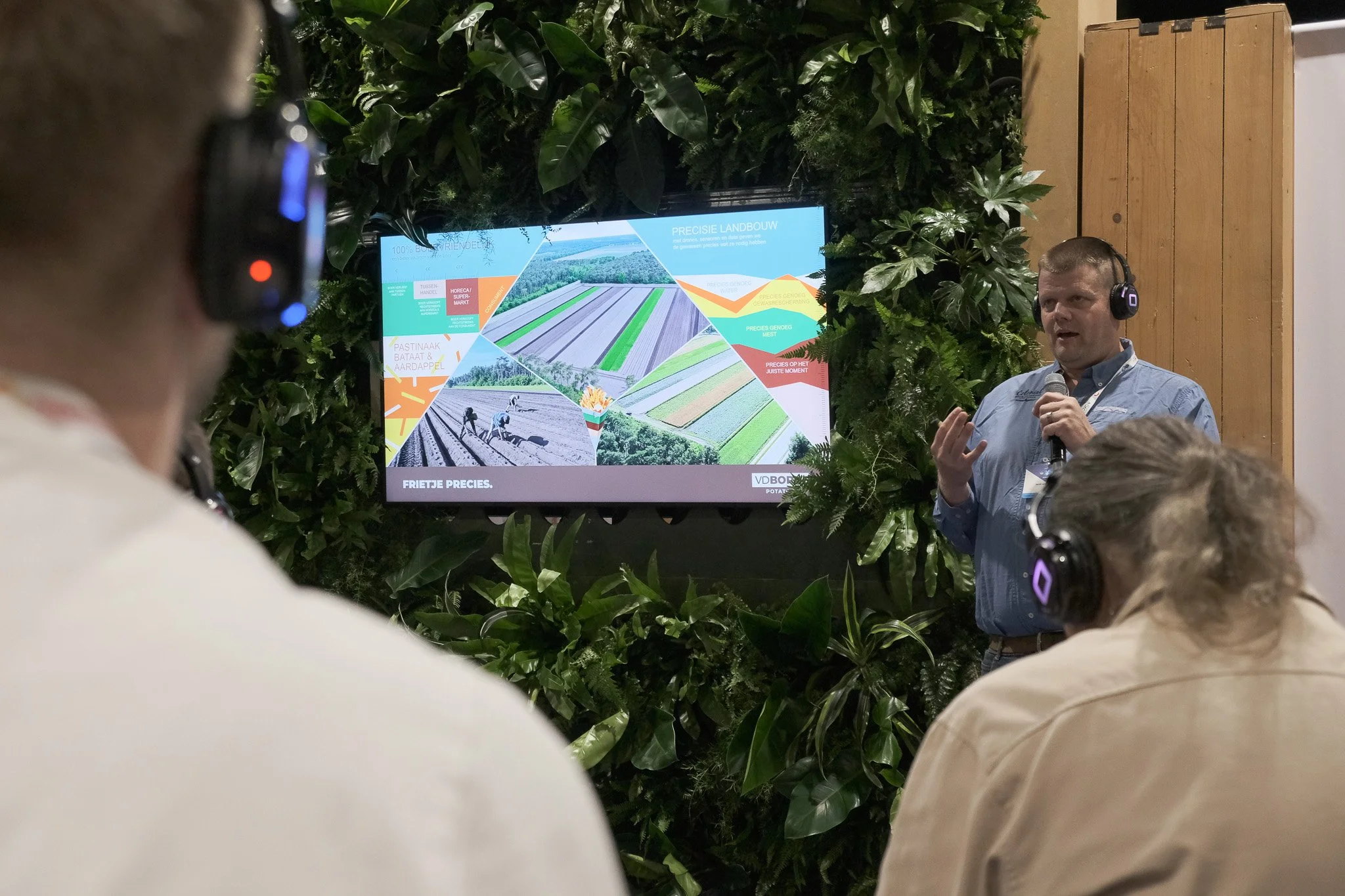
He’s especially concerned about losing generational farming intuition (“Fingerspitzengefühl”). With only about 40 growing seasons in a typical career, farmers need better tools to learn faster. The Campus and digital tools help bridge that gap.
Jacob’s operation shows that large-scale farming and precision technology can go hand in hand with care for soil and sustainability. You don’t need hundreds of employees — smart systems and good data can make a small team incredibly effective.
For farmers and producers considering precision approaches, his key messages were:
Start with good data collection and learning from your own fields.
Combine technology with traditional knowledge — don’t replace one with the other.
Focus on practical results: lower costs, better timing, and healthier soils.
Share what you learn — the whole sector benefits when knowledge spreads.
If you’re curious to see it in action, check out vandenborneaardappelen.com and the VDBORNE Campus. Jacob and his team are openly sharing experiences to help more farmers move forward.
Precision farming isn’t science fiction — it’s happening now on real Dutch fields, delivering results that matter for profitability and the environment. Worth exploring for your own operation.
The Value of Blockchain for Trust and Transparency in the Food Chain
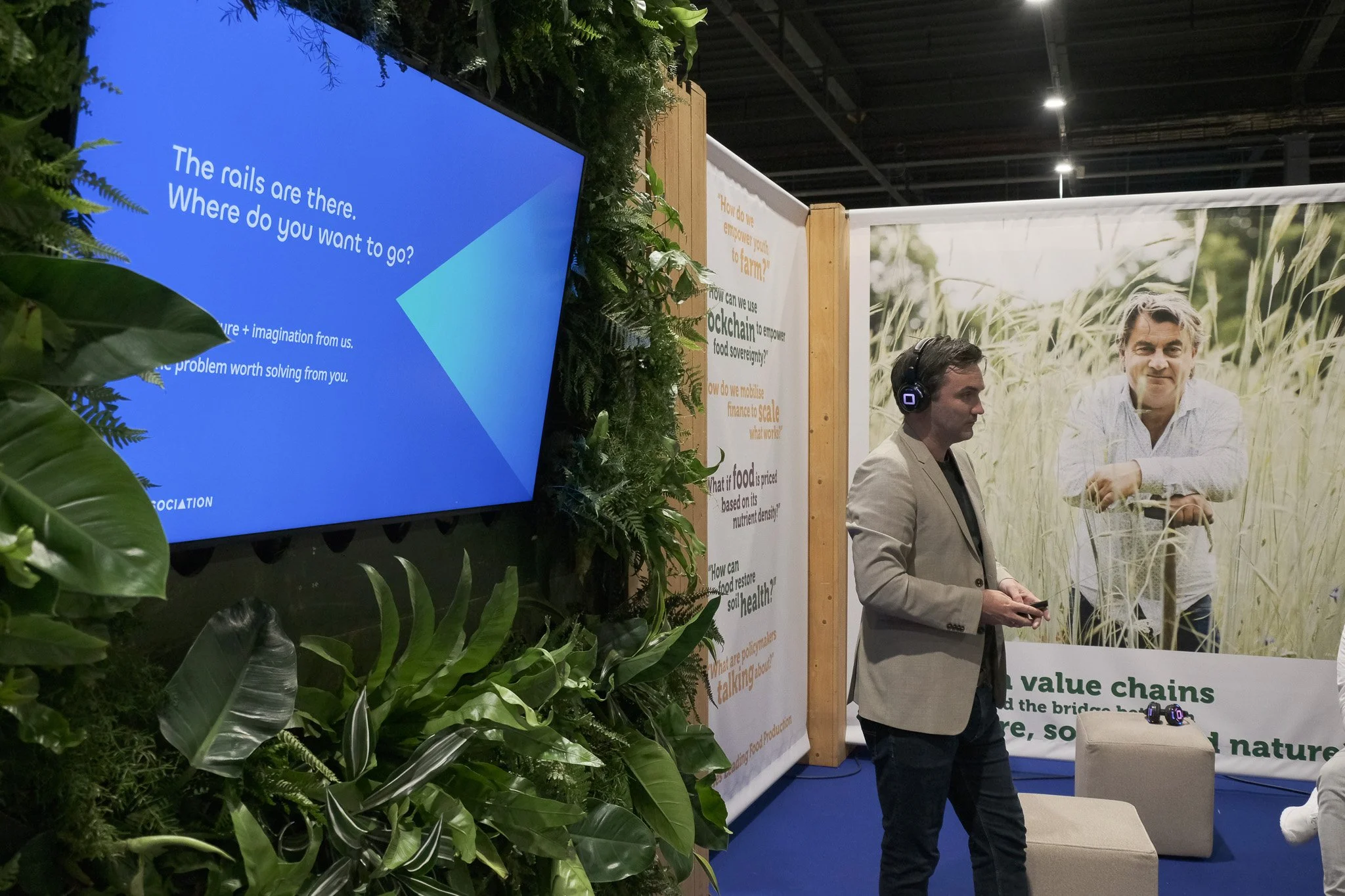
Asgeir Oskarsson of the BSV Association demonstrated how blockchain can rebuild trust through verifiable traceability, fairer payments, and reduced intermediaries. Asgeir brings deep expertise in blockchain infrastructure and its real-world applications, while Alexander Mann, CEO of Agritech shared concrete examples from the vineyard sector. Together they showed how blockchain is much more than cryptocurrency — it’s practical infrastructure that can bring transparency, fairness, and efficiency to food production and distribution.
Why the Food Chain Needs Better Tools
The current system isn’t working well for everyone. Farmers typically receive only 9–12% of the final retail price. Over 5.3 million farms have disappeared in recent decades. Consumers often don’t know where their food really comes from, and trust in labels is low.
Asgeir explained that blockchain can help by acting as a shared, tamper-proof digital ledger. Every entry is permanent, verifiable, and doesn’t rely on a central authority. This makes it possible to track products from farm to fork with real confidence.
Key advantages highlighted:
Extremely scalable (over 1 million transactions per second)
Extremely low cost (fractions of a cent per transaction)
Users control their own data and identities

Real-World Example: Virginia Vineyards
Alexander Mann brought the discussion to life with a vineyard case study in Virginia. Using hyperlocal weather sensors, one vineyard was able to limit frost damage to less than 2% crop loss, while neighbouring vineyards lost up to 60%.
By anchoring this sensor data on the blockchain, they created trustworthy records for:
Provenance and quality tracking
Consumer-facing vintage reports
Faster, more reliable crop insurance claims
This shows how combining sensors with blockchain can protect farmers’ income and give consumers better information.

The Common Source Platform
Asgeir introduced the Common Source platform as a practical example already in use. It connects farmers, consumers, researchers, and cities in regional food networks. Users have verified digital identities they fully control. The system can reward participation with tokens and securely share sensor data, land information, and quality measurements.
The goal is to shorten supply chains, reduce middlemen, and let real value flow back to producers while giving consumers confidence in what they buy.
A Tool for Bigger Change
Both were clear: blockchain is not a magic fix by itself. It’s infrastructure that supports community-driven solutions. It can help with:
Verifiable sustainability claims
Fairer payments and reduced risk for farmers trying new practices
Transparent data sharing between farmers, advisors, and policymakers
New business models that reward quality and transparency
They emphasised the need for collaboration — between farmers, cities, researchers, and technology providers — to build systems that actually work for people on the ground.
Why This Matters for Advisors, Policymakers, Agribusiness and Supply Chain Professionals
For those working in agri production and business, agricultural advisory services, policy, or supply chains, blockchain offers new ways to:
Verify claims and build consumer trust
Support shorter, more transparent supply chains
Reduce fraud and greenwashing
Create better data flows for decision-making
The technology is ready. The real work is in defining the right problems and building the right partnerships.
If you’re advising farmers, shaping food policy, or managing supply chains, it’s worth exploring how tools like these can support more resilient and fair food systems. The BSV Association and Common Source platform are actively developing practical solutions and welcome collaboration.
The session made one thing clear: technology alone won’t fix the food chain — but when used thoughtfully as part of community and systemic efforts, it can be a powerful enabler for positive change.
Designing the City: Regenerative Food Regions
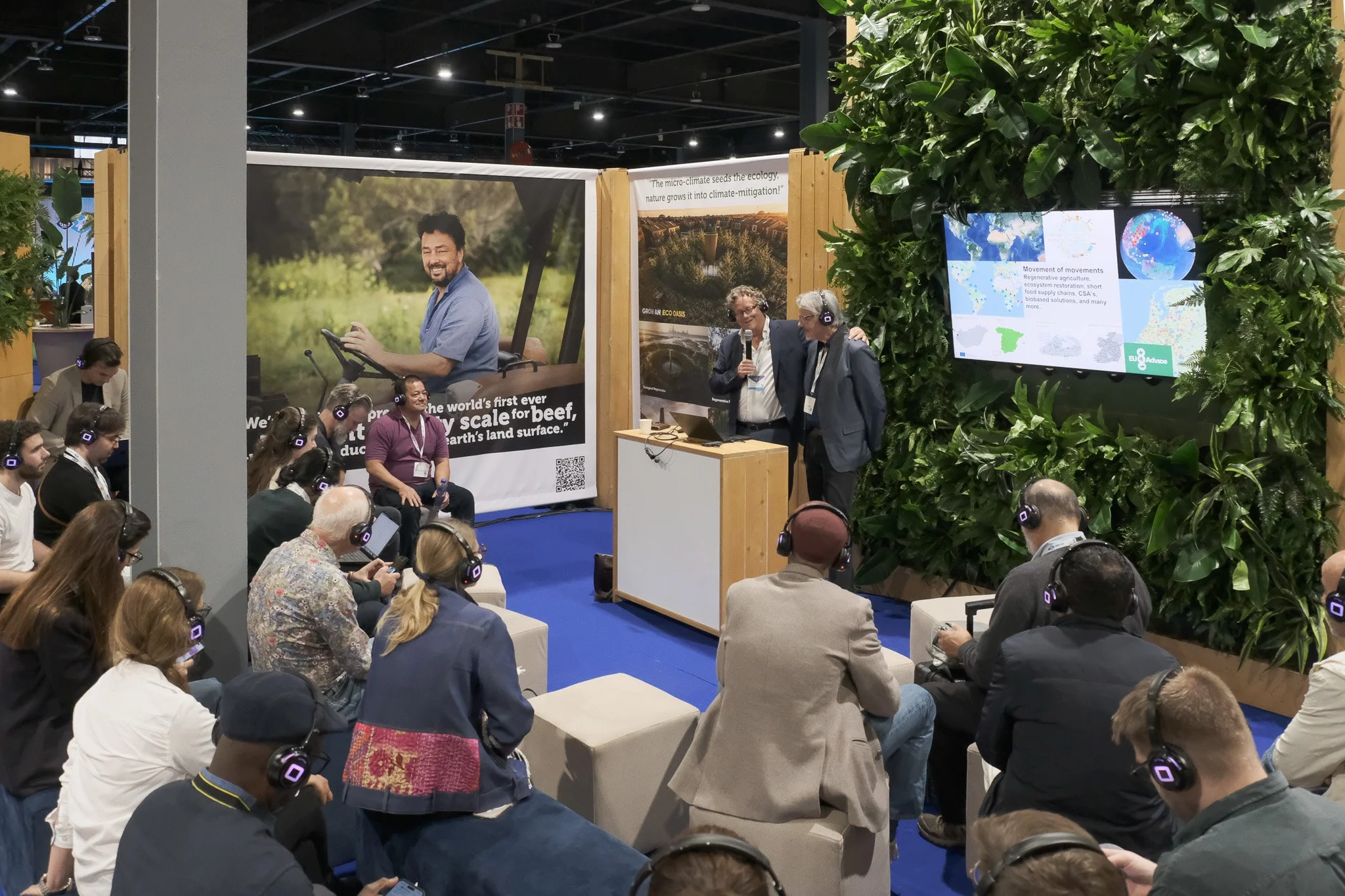
Dirk Wascher (SUSMETRO) and Mark Frederiks (Common Source) hosted a lively two-hour roundtable called ‘Designing the City’. The session brought together a diverse group — farmers, researchers, city planners, tech experts, and people from Canada, Africa, the Middle East, and Europe — to talk about how we can use foodscape mapping, data, design, and collaboration to create stronger regional food systems.
Starting with What We Already Have
Dirk kicked things off by showing how we can map what land is available and what people actually eat in a region. Using tools like European land cover data, soil maps, and food consumption patterns, his team creates “foodscape” assessments. These maps reveal big gaps — for example, plenty of grassland for dairy but not enough local vegetables or fruits to feed nearby cities.
The idea isn’t to force big changes overnight. It’s about understanding the current reality and finding smart, step-by-step ways to improve it — whether that means shifting some land use, supporting regenerative practices, or connecting farmers more directly with local markets.
Mark Frederiks added an important point: we already have thousands of small initiatives, living labs, and community projects around the world. The challenge is connecting them, learning from each other, and scaling what works. He talked about building networks of living labs — places where people test ideas, share data, and adapt quickly when crises hit, like during conflicts or extreme weather.
Technology, Data and Trust
Several speakers showed how data and technology can help. Jacob van den Borne, the precision farmer from Reusel in the Netherlands, shared how drones, sensors, and his “Ground Control” platform help him make better decisions on his large potato operation. Real-time data on soil moisture, plant health, and irrigation has improved yields and reduced waste.
Others discussed blockchain as a tool for transparency and trust. It can verify where food comes from, support fair payments, and reduce the number of middlemen who take most of the value. The goal isn’t to replace human connections but to make them more reliable with clear, tamper-proof records.
People, Culture and Local Realities
The conversation kept coming back to people. Tatiana from the Middle East reminded everyone that trust in local food isn’t automatic — consumers need to know how it’s grown and why it matters. Education, school gardens, and clear labeling can help reconnect people with their food.
Fadel from Africa shared examples from Nairobi and Senegal, showing how urban agriculture policies and efforts to balance city and rural needs can create more resilient systems. Ranko from Croatia emphasised that we can’t fix food systems in isolation — we need to connect them with education, tourism, health, and community life.
Practical Next Steps
The group didn’t just talk theory. They explored:
Using data to identify opportunities for local production and circular economy projects
Supporting farmers during transitions with better subsidies and risk-sharing
Creating regional food networks that balance local needs with export income
Building living labs as places for experimentation and learning
Dirk showed how tools like Metropolitan Foodscape Planning can help cities and regions make smarter decisions about land use, logistics, and food supply.
Why This Matters
This roundtable made one thing very clear: we don’t need to wait for perfect top-down solutions. By combining good data, practical tools, farmer knowledge, and community energy, we can start redesigning food systems that are more resilient, fair, and connected to local realities.
Whether you’re a farmer, city planner, advisor, student, or policymaker, there’s a role for everyone. The session ended with a strong sense of possibility — and an invitation to keep collaborating, sharing data, and building these new food regions together.
If you’re working on food systems, regional development, or sustainability, tools like foodscape mapping, living labs, and transparent data platforms are worth exploring. The future of food is being designed now — and it starts with understanding our own places better.
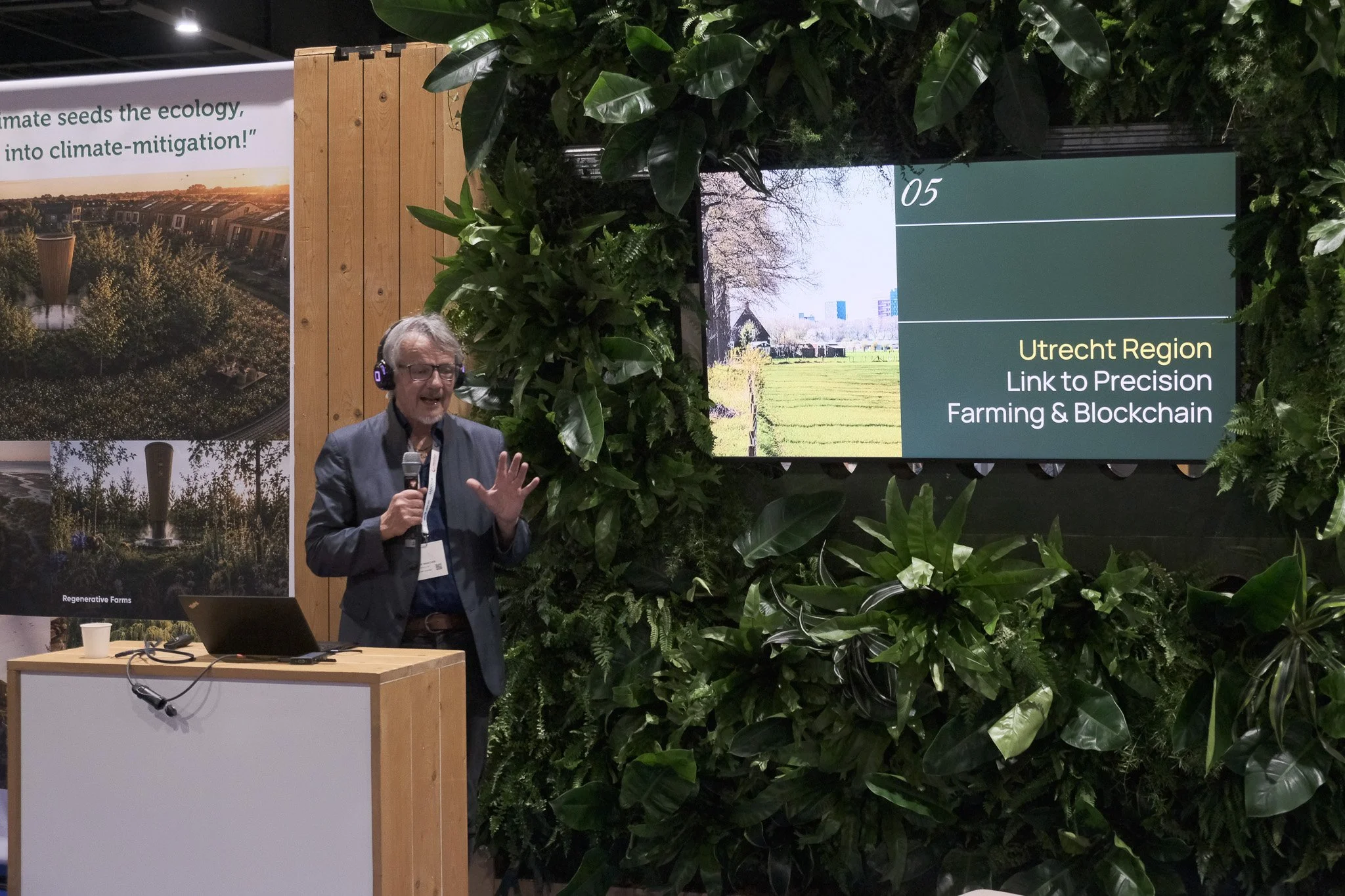
Common Threads from Day 2
Day 2 highlighted practical approaches:
Plan for access and resilience in crises
Work with nature’s intelligence (water, precision tools)
Use technology to support transparency and better decisions
Design food systems at the city-region level through collaboration
The day left participants with concrete ideas and renewed motivation. Cities Leading Food Production continued on Day 3 with global perspectives and closing reflections.
We invite farmers, collectives, municipalities, NGOs, advisors, experts, and policymakers to stay engaged and help build living, resilient food regions together.
Read the recap of the final day of Cities Leading Food Production.
