Food systems in play: Amsterdam’s long game for food security and resilience
Common Source has been developing food networks for more than a decade. Our organisation is small, but its reach is surprisingly wide. So, what have we achieved, practically?
A good example is our EU4Advice master living lab for Central Europe, active in Amsterdam and Utrecht. A connected and active network of 100+ food initiatives and change makers, and a youth community of more than 650 active members and a connected and active network of 100+ food initiatives and change makers in Utrecht: the bottom-up food movement.
Conversely, the living lab also inspires and activates advisors, policymakers, short food supply chains and other stakeholders. At the heart of it all is a single question: how can we organise food systems in a way that keeps their value local, fair and sustainable?
Our approach is less about building one project and more about building networks of projects. Each initiative – whether it is a short food supply chain start-up, a youth-led food campaign, or a tool for community finance – each serves as a node in a larger web. This design is intentional: resilience in the food system, we argue, will come from many interlinked communities and actors able to share risks and rewards.
Central to this work is the idea of valuing what markets ignore. Many of the benefits that the grassroots food networks create don’t show up in standard accounting. We have experimented with ways to make those invisible values visible, including early trials with blockchain technology.
In this context, blockchain is a digital tool to track food and money flows transparently. We have tested how communities could keep more of the wealth generated by food within their neighbourhoods. We initiated the first agricultural blockchain in the Netherlands eight years ago. This evolved from the question: “Why can’t we keep value circulating in our system, instead of giving it away?”
Mark Frederiks, Managing Director of Common Source: “We approach food systems like a game. Not because feeding a city is easy, but because it involves different layers of challenges that have to be played through. At the most basic level, there are the practical tasks: organising farms, moving food, setting up markets. Then comes the layer of networks and leadership, where personalities and power struggles can make or break cooperation. And finally, at the highest level, comes co-creation: working out new ways to collaborate and, crucially, deciding what has real value.”
“However, you can have the best technical solutions, but if the people around the table don’t trust each other, it stops right here.”
Nieuw-West
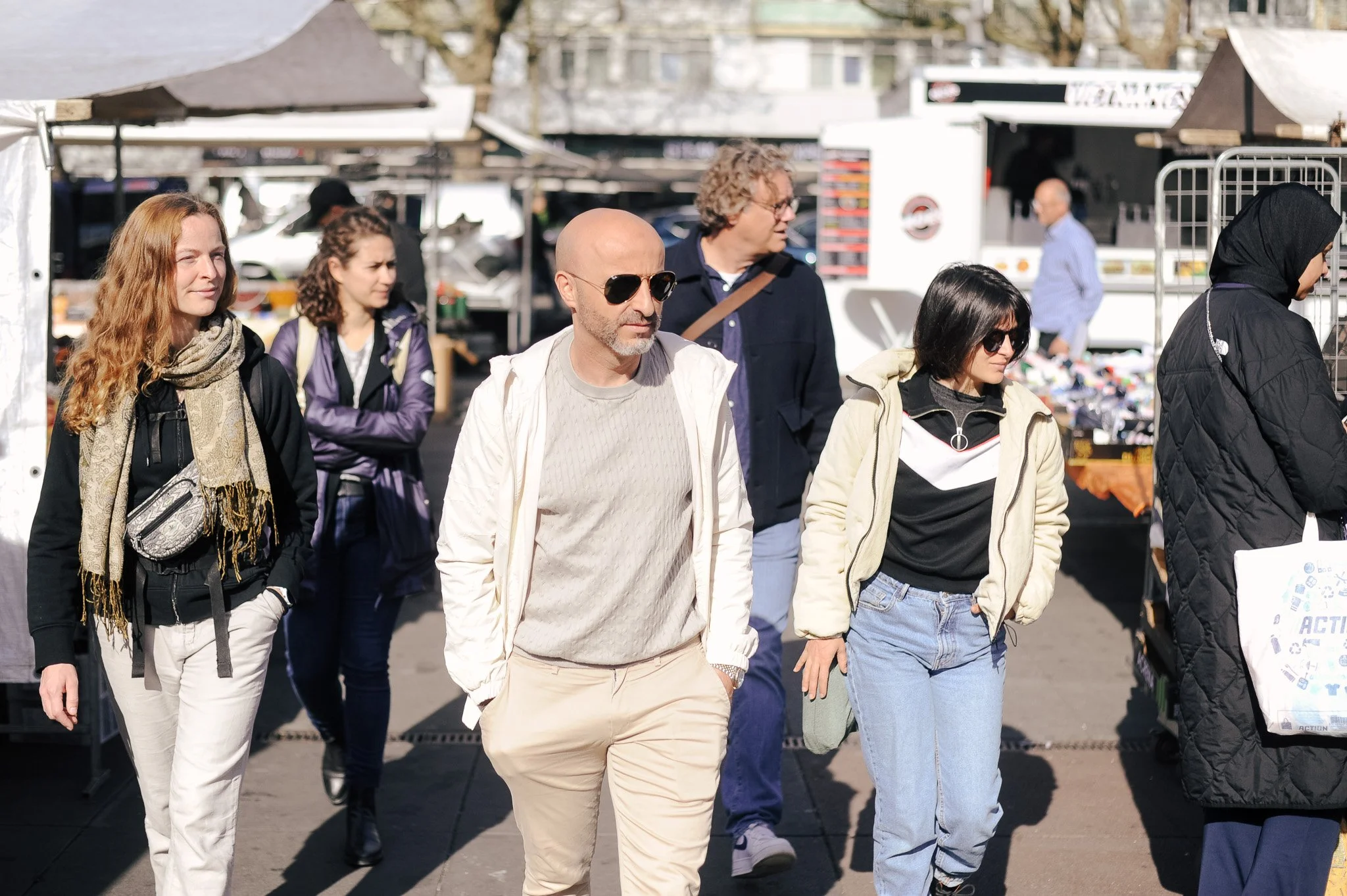
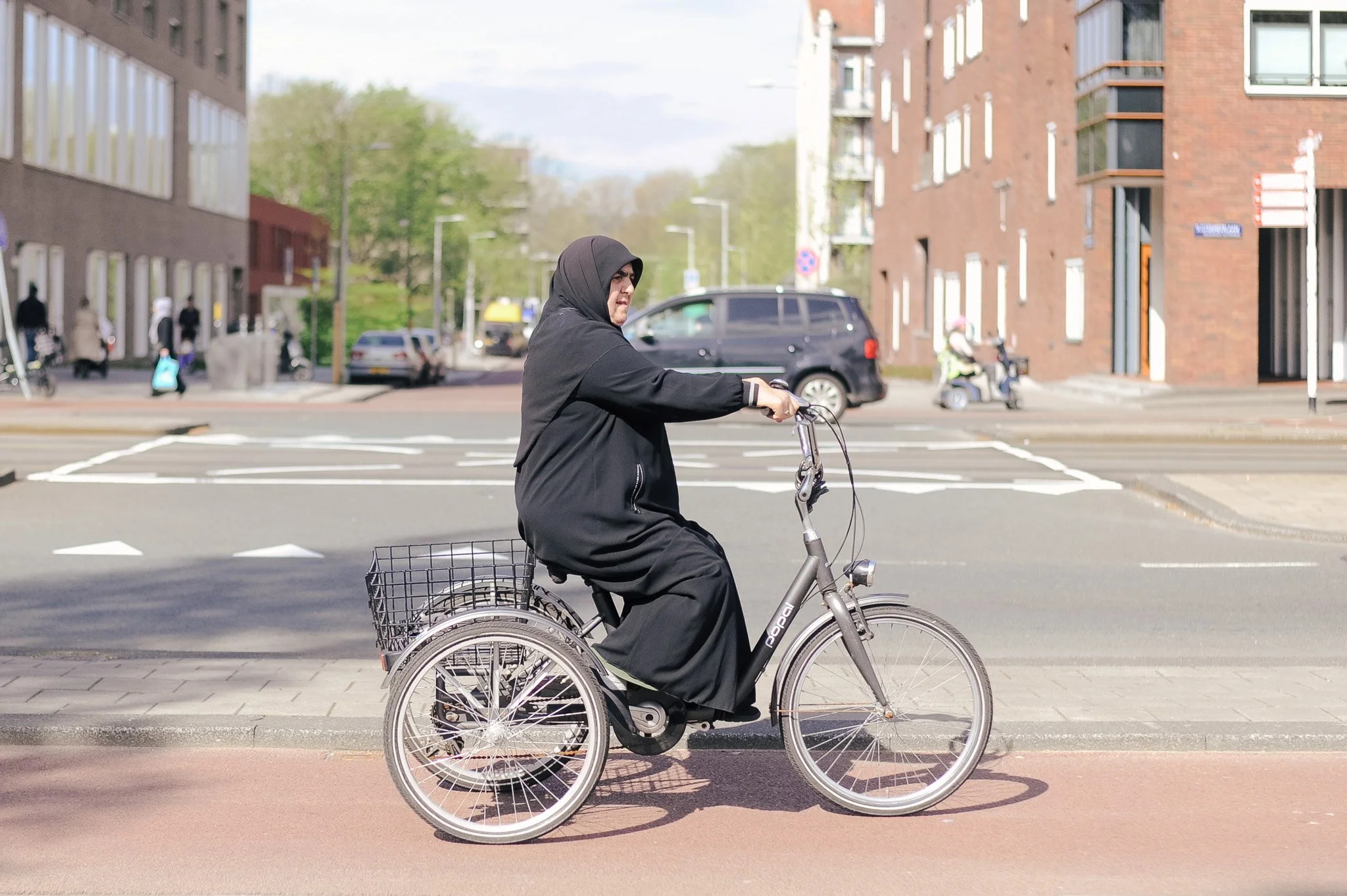
Our living lab in Amsterdam active in the district of Nieuw-West, one of Amsterdam’s economically challenging neighbourhoods, but also one with important promising perspectives. A thriving community garden, a bustling weekly farmers market square, located within walking distance of each other, yet serving very different populations. One attracts middle-class residents who are interested in organic gardening, the other serves low-income households with limited food budgets. The challenge, and the opportunity: how to connect these initiatives across economic and cultural divides?
In Nieuw-West the living lab works together with the local community leaders, entrepreneurs and food initiatives to better understand residents’ food needs, and it explores how municipal support could be channelled into both improving access to healthier food and creating new economic opportunities for citizens. The progress of this process provides a powerful illustration of what inclusive food governance looks like when underserved communities are not simply recipients, but active shapers of solutions.
MijnStadstuin is one of the first urban agriculture projects in Amsterdam. Over the past decades, they have developed four hectares into experimental gardens and spaces for food entrepreneurship. With multiple CSAs, a food forest, a sauna caravan, and more, MijnStadstuin continues to grow and develop as a beautiful location and a vital hub for the city’s food transition.
In July of 2025, Grounded, 7 Billion Presidents and MijnStadstuin organised a weekend summer camp that brought together nature lovers, change-makers, creatives and curious minds in the Gardens of West, for three days of meaningful work, inspired learning, and joyful play.
On November 25th 2025, the entrepreneurs of Nieuw-West, market association Plein ‘40-’45 and Grounded celebrated the collaboration within the living lab with the first Herbs Festival (Kruidenfestival).
Together we’re working on:
strengthening the image of Plein '40-'45: The aim is to highlight the cosy and diverse atmosphere to attract more visitors;
working with local authorities: dialogue with city district for wider use of the square and improve social and economic activities;
local food chain: work with local farmers and entrepreneurs to reduce food waste and improve sustainability;
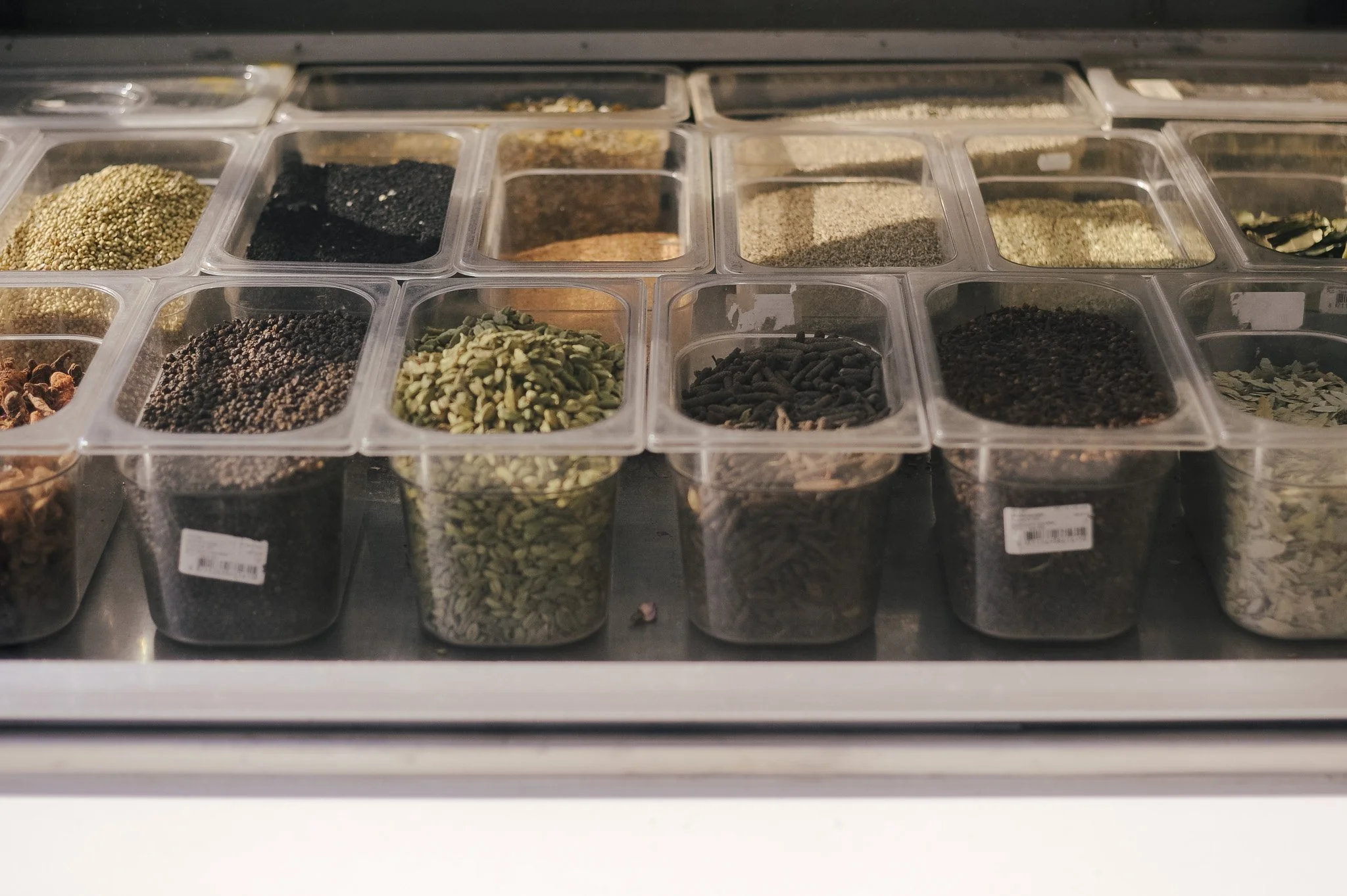
herbs festivals for local food: the festival promotes local food culture and connects entrepreneurs with residents for collaboration;
sustainable vegetable production: collaboration with ZorgVK Groen that connects social care and sustainable agriculture by employing people with vulnerabilities;
preventing health inequalities: affordable healthy food is essential for improving life expectancy in New West.
We bring together local produce, new perspectives, a variety of flavours and, above all, a real connection with one another and with local production, for food security, health and a resilient society!
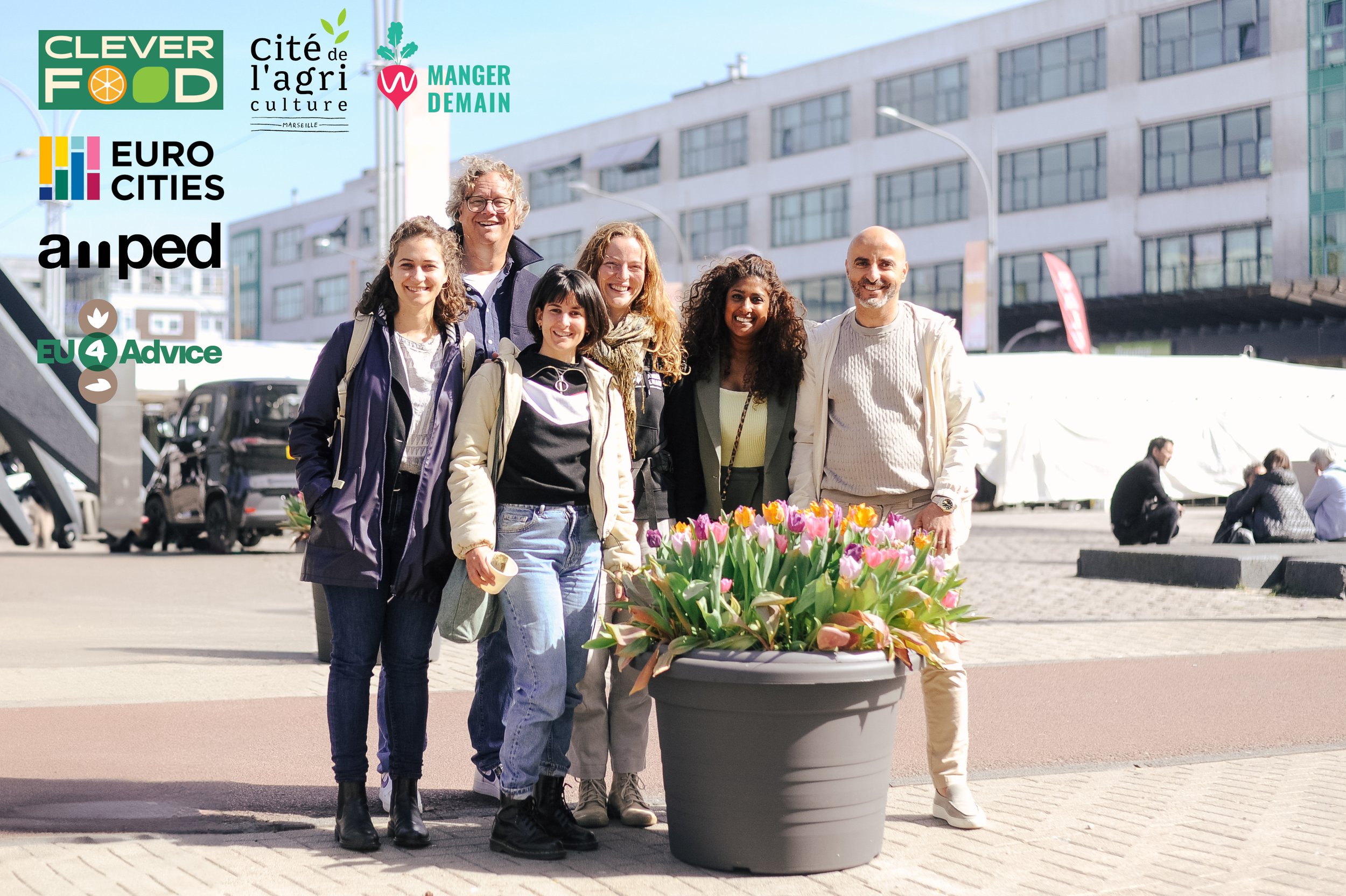
This is what delegations from Cellule Manger Demain in Belgium, and Cité de l’Agriculture in Marseille found out during a Cleverfood study visit to Amsterdam.
The visit centred around Nieuw-West, where participants saw both promises and challenges. They visited a thriving community garden and a bustling street market, located within walking distance of each other yet serving very different populations. One attracted middle-class residents interested in ecological gardening, the other served low-income households with limited food budgets. The challenge, and the opportunity, was how to connect these initiatives across economic and cultural divides.
The district of Nieuw-West works with a local community leader to better understand residents’ food needs, and how municipal support could be channelled into both improving access to healthier food and creating new economic opportunities for local people. For the participants, this was a powerful illustration of what inclusive food governance looks like when underserved communities are not simply recipients but active shapers of solutions.
The peer learning was immediate. As Roberta Rigo from Cité de l’Agriculture reflected: “The visit allowed me to take a step back and reflect on our role as collective dynamics facilitators… I go back home with a theoretical framework and a powerful narrative that explains what we do.” For Romane Cloquet from Cellule Manger Demain, the main lesson was the diversity of ways to weave connections between stakeholders.